AI at work
Putting AI to work: implementing it in organisations, why projects fail, jobs and pay, and the firms buying businesses to run them with AI.
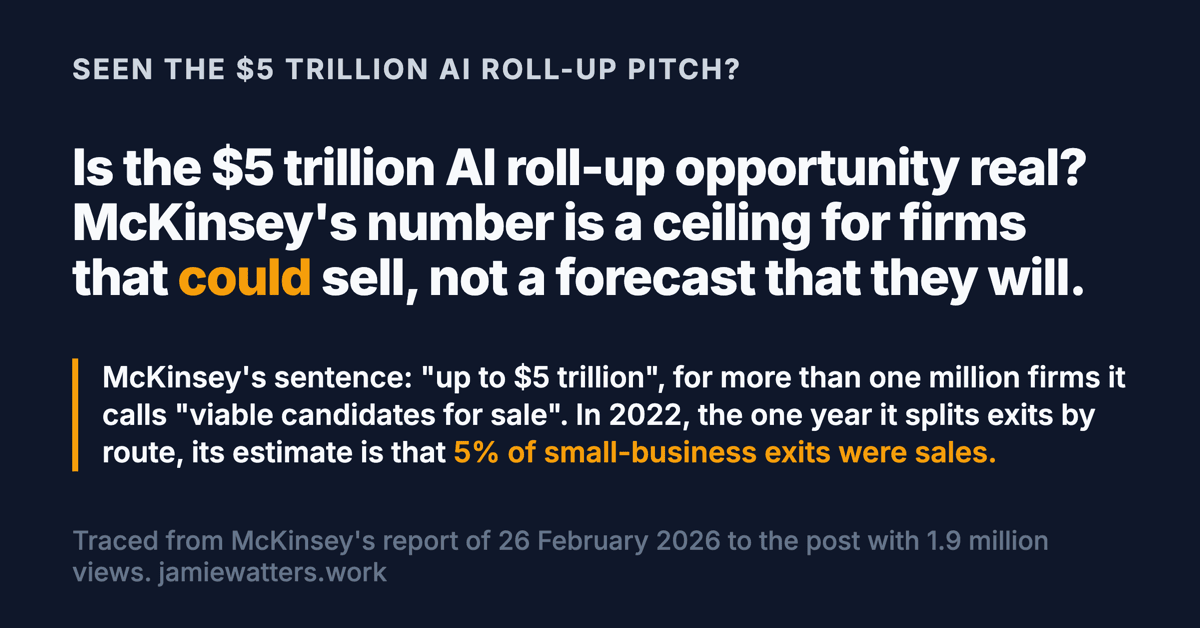
Is the $5 trillion AI roll-up opportunity real? McKinsey's number is a ceiling for firms that could sell, not a forecast that they will
The AI roll-up pitch says $5 trillion of American businesses will change hands by 2035, citing McKinsey. McKinsey's sentence says up to $5 trillion, for firms it calls viable candidates for sale. In 2022, the one year it splits exits by route, 5% of exits were sales.
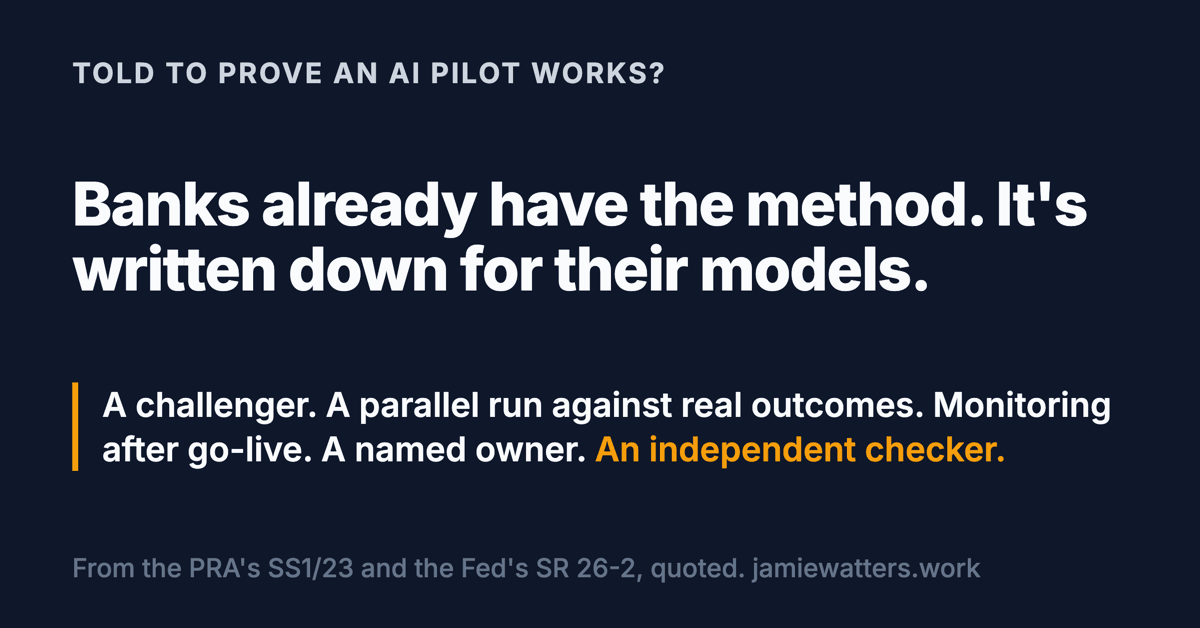
Banks already have a method for checking AI works. Four steps to steal it from their model-risk teams
Told to show an AI deployment works? Bank model-risk teams already run the test, written down by the regulator: a challenger, a parallel run against real outcomes, monitoring after go-live, a named owner, and an independent checker. Four steps to steal it, whatever business you're in.
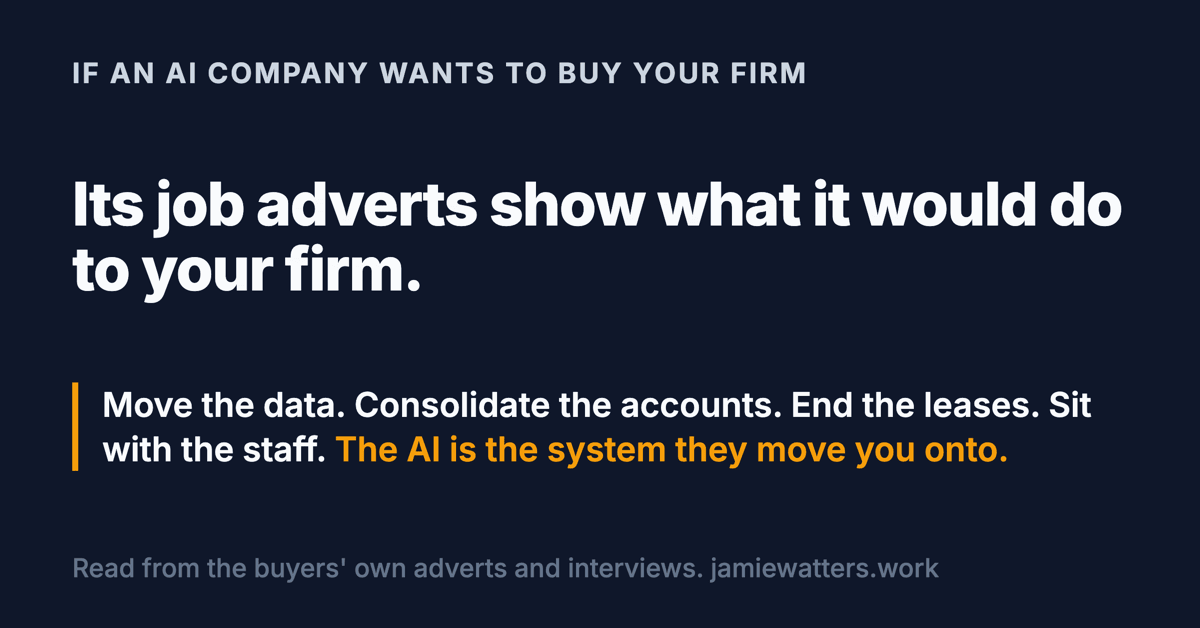
An AI company wants to buy your firm. Its own job adverts show what it would do, and most of it you can do yourself
AI-backed buyers are approaching small accountancy, lettings and IT firms. Their own job adverts show the first months after a sale: moving data, consolidating accounts, ending leases, months on site with your staff. Which of those steps you can take without selling, and the question to ask before you sign.
How to implement AI in your organisation and check it's working
What the evidence supports for putting AI to work in an organisation, graded claim by claim, and a six-step method you can run on one process.
The usual signs that AI is working can mislead
What staff say, what bosses see and the person checking the AI's work can all tell you AI is working when it isn't. Hospitals, airports and banks already have better tests. Here they are, as six steps for one process.
How to make AI pay off at work: the job of the engineers Anthropic sends into companies
Forward deployed engineers are the engineers AI firms like Anthropic send to work inside companies. What they do, their four moves as a plan you can copy, and why mapping the work gets four weeks, not forever.
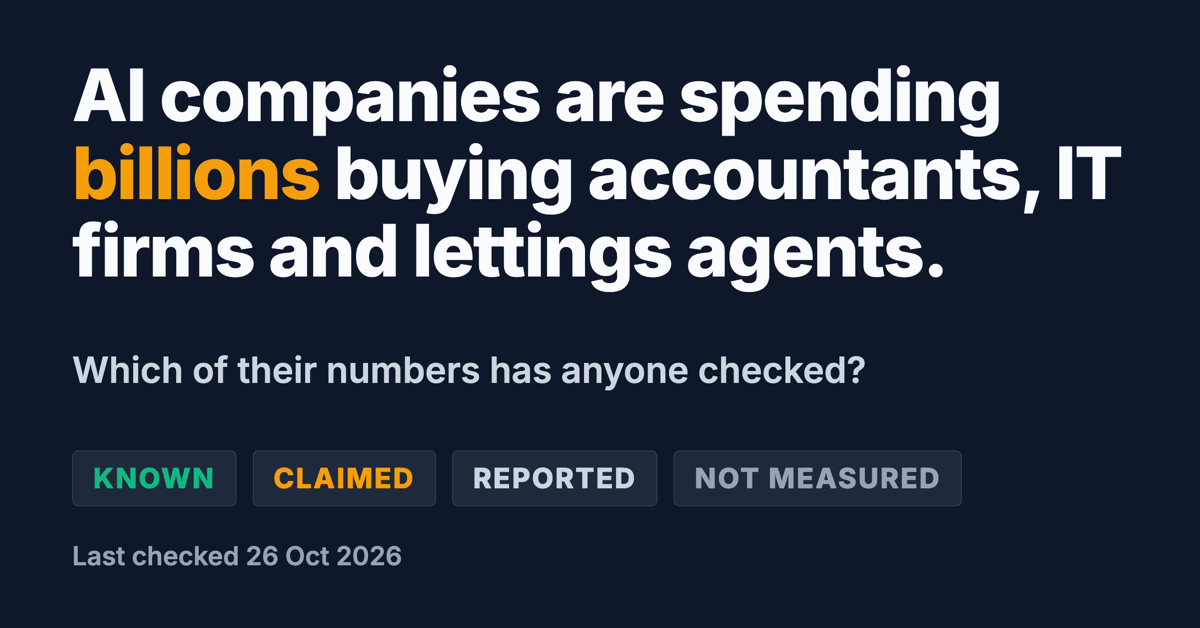
AI companies are spending billions buying firms. Here's which of their numbers anyone has checked
AI companies are buying accountants, IT firms and lettings agents, and billions are riding on it. Every number I could check, sorted into what the filings show, what the buyers say and what nobody has measured, dated 26 October 2026.
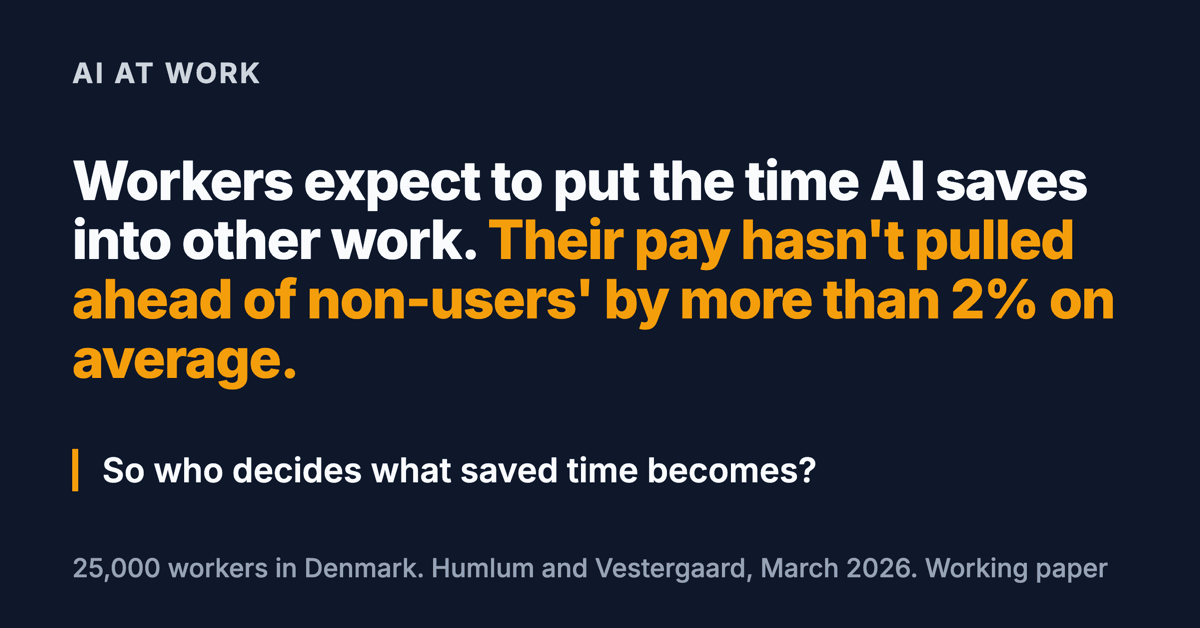
If AI saves you time, why aren't you being paid more for it?
In a study of 25,000 Danish workers, people saving time with AI say they expect to spend it on other work, and their pay hasn't pulled ahead of non-users' by more than 2% on average. Who decides what saved time becomes, and a log to track your own.
An AI company wants to buy your firm? Ask it to prove the AI works first
AI-backed companies worth billions are buying accountants and IT firms. If one calls you, here is what proof its AI works would look like, who has shown any of it, and what to ask before you sell.
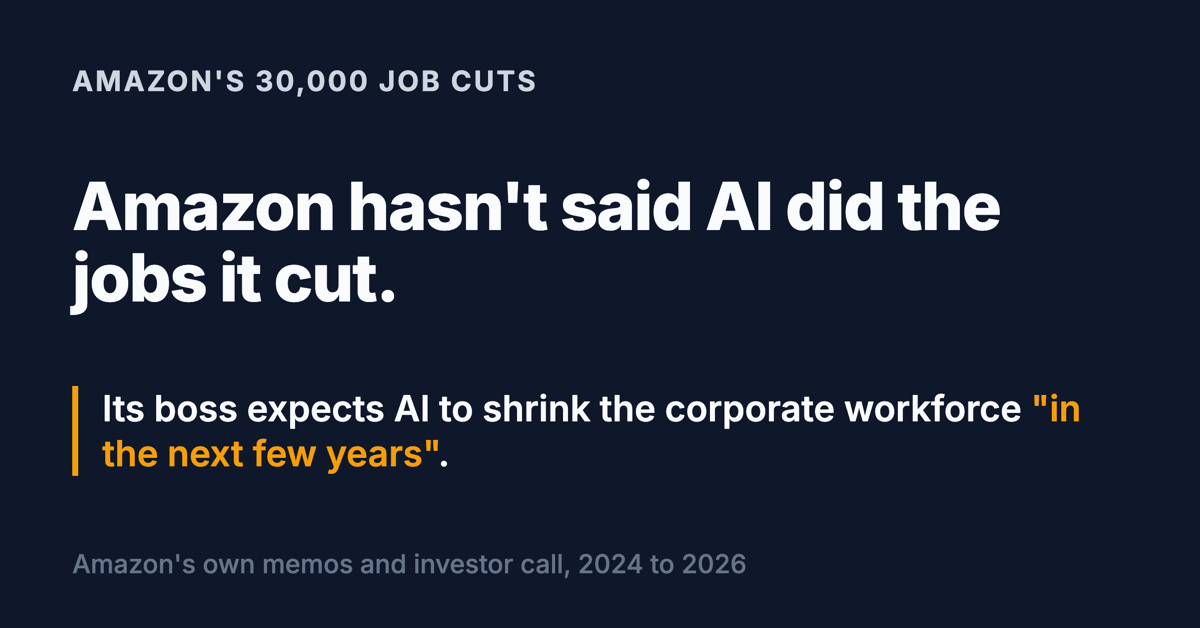
Amazon's 30,000 job cuts weren't proof AI is taking jobs. What its boss says is coming is closer to it
Amazon said AI was why it had to move faster, not who did the work. Its boss expects AI to shrink its corporate workforce later. Here's the record, in date order.
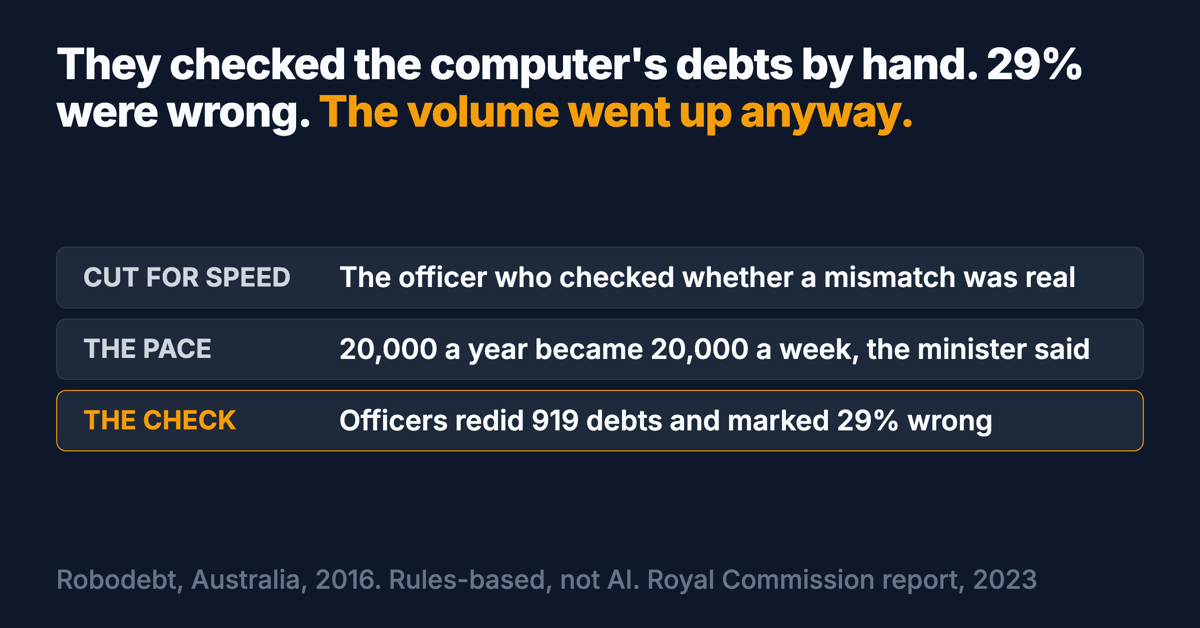
Automating with AI? Australia cut one human check from its welfare debt system and unlawfully billed 433,000 people
Robodebt cut a slow human check to go faster. Officers then redid 919 of its debts by hand and marked 29 per cent wrong, and the volume went up anyway. Five things to do before AI takes over a process.

80% of AI projects fail. Nobody ever measured it.
"80% of AI projects fail." You've seen it in pitch decks, board papers, keynote speeches. It's used to justify buying AI software, and to justify not buying it. I went looking for the study behind it. There isn't one.
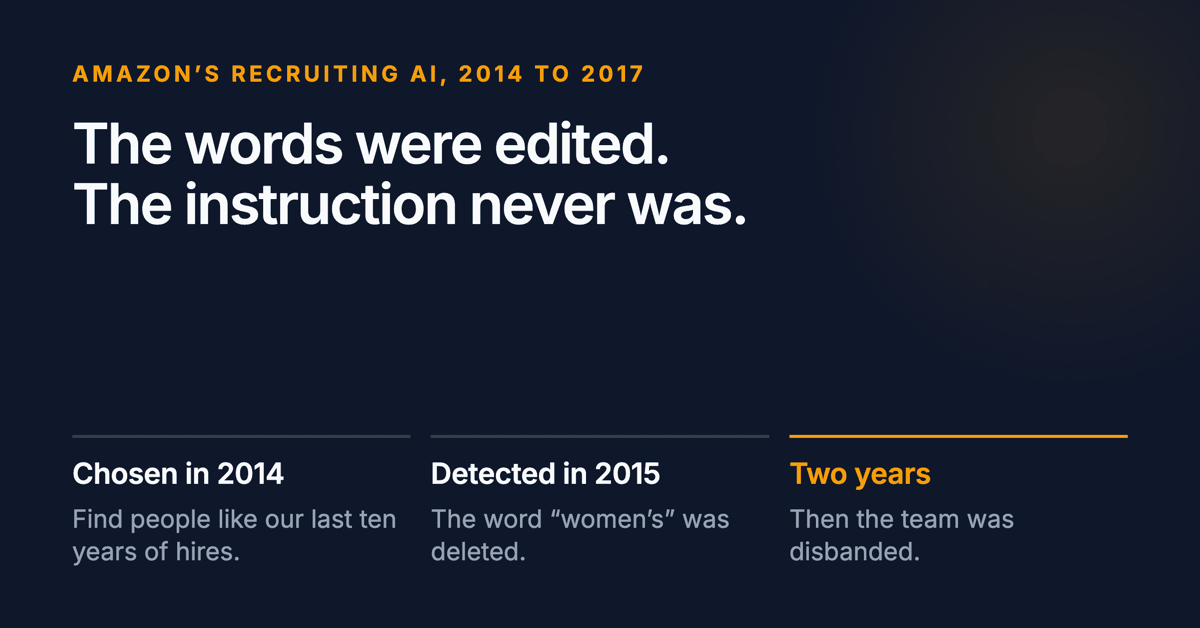
Amazon's AI did exactly what it was told. Deleting words for two years did not help.
Amazon told its AI to find people like its past hires, then spent two years editing the words it produced. The instruction underneath was never touched.
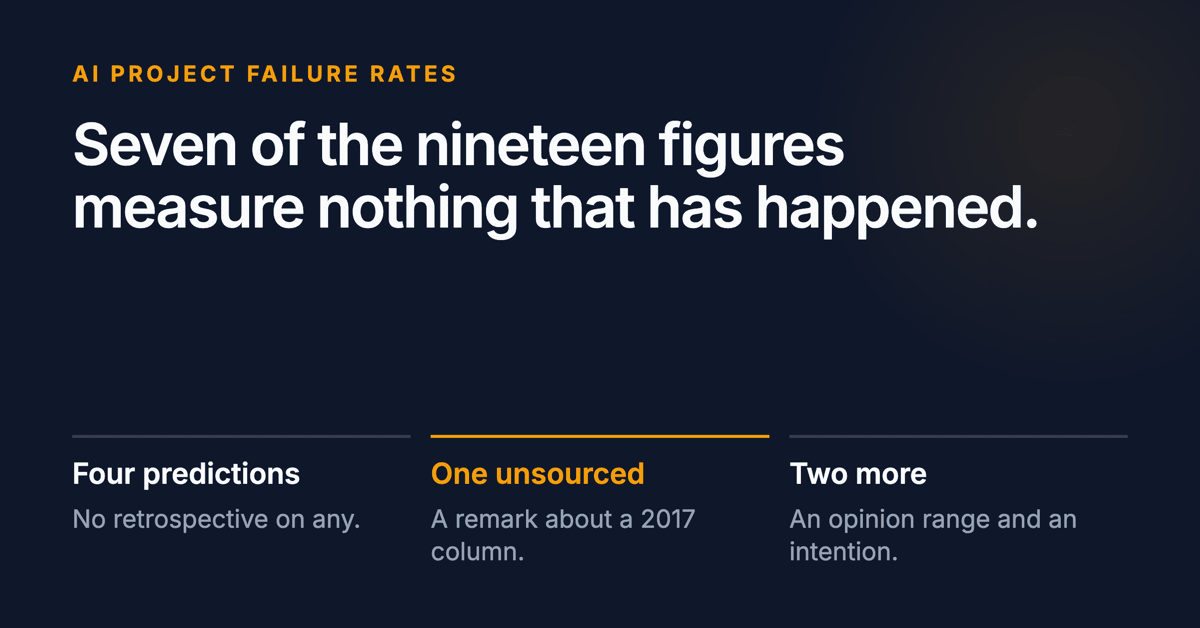
AI project failure rates: four questions that tell you whether the number means anything
I classified nineteen of the most-cited AI failure statistics. Seven of them measure nothing that has happened. Here are the four questions that separate the…
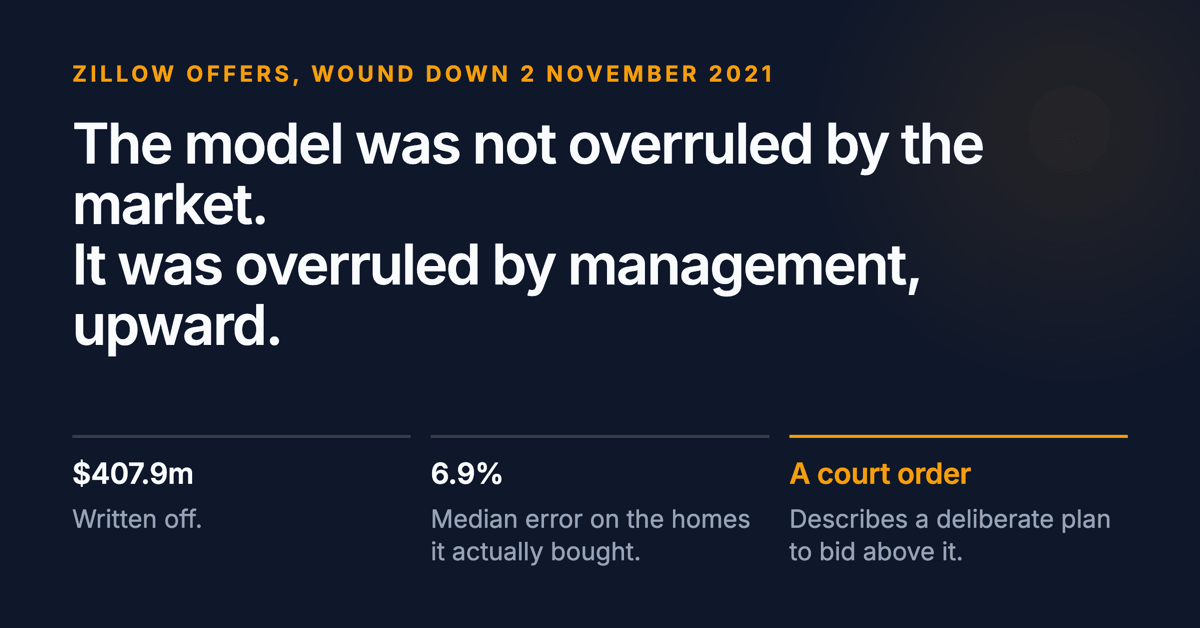
Zillow wrote off $407.9m. The fix everyone recommends would have changed nothing.
The story is that an algorithm mispriced houses and a company lost half a billion dollars. A federal court order describes something else: a deliberate plan…
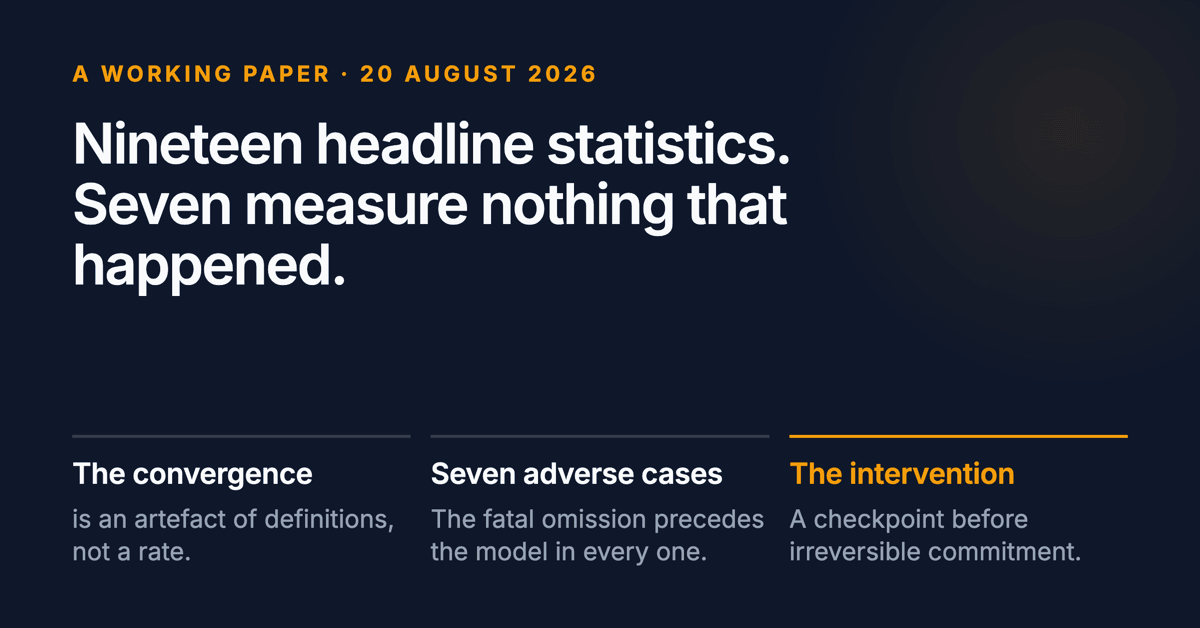
Why AI projects fail: 19 headline statistics, and what each one actually counts
Nineteen headline AI failure statistics, traced to source. Seven are not measurements of anything that happened.

Why AI projects fail, and how a 1969 method reveals the conflict you didn't know you had
A kick-off meeting. Someone says "we're going to roll out an AI coding assistant across engineering." Six people nod. Everyone understood the sentence. Almost nobody meant the same thing by it.
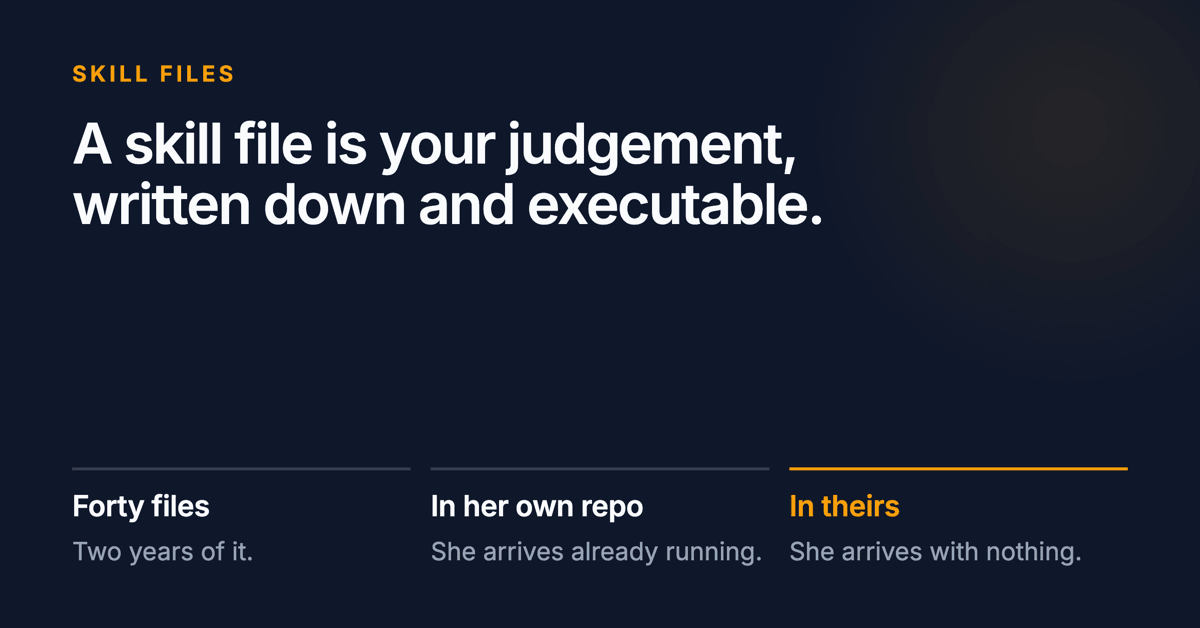
Own your AI skill files, or your job becomes one
A skill file is your judgement, written down and executable. Who owns the repo decides whether that's an asset or an extraction.
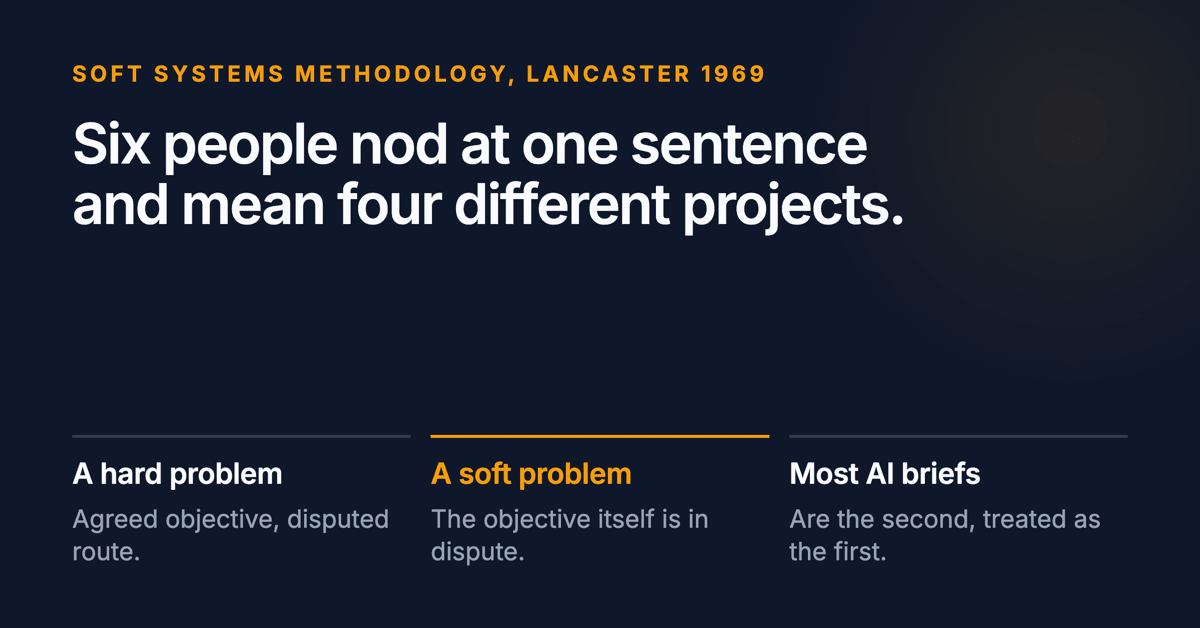
Soft Systems Methodology explained: Checkland's 1969 method for AI briefs nobody agrees on
Most AI projects fail on the brief, not the model: six people nod at one sentence and mean four different projects. Soft Systems Methodology, built at Lancaster from 1969 for exactly that, in plain English: rich pictures, root definitions, CATWOE, and how to run it on the next thing on your roadmap.
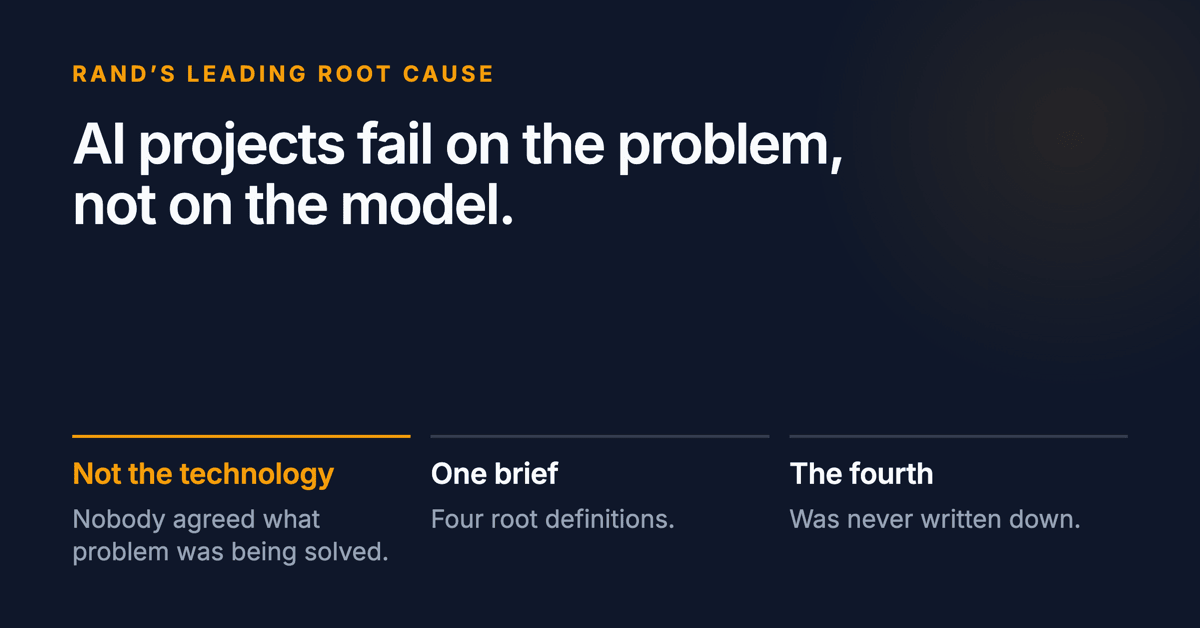
80% of AI projects fail on the problem, not the model: Soft Systems Methodology
More than 80% of AI projects fail, and RAND's leading root cause is not the technology: nobody agreed what problem was being solved. Soft Systems Methodology, built at Lancaster from 1969 for exactly that failure, gives you a way to surface the disagreement in an afternoon instead of a year.