Business
Strategy, revenue, and the honest arc of the journey.

The world's AI laws disagree. Four duties keep turning up anyway
Where AI regulation stands in October 2026 across the EU, the UK, the US, China and the rest of Asia: what binds now, what lands by 2028, where the rules contradict each other, and the four duties that keep recurring. The key dates re-checked at source on 14 October.
Bosses see no gain from AI, staff swear it saves time. What the evidence says works
What the evidence says about putting AI to work in an organisation: who does the implementing and what each way costs, finding the real process, deciding what AI does, testing it, measuring it, and what it does to people. Every claim graded, with ten cases checked by someone other than the vendor.
The usual signs that AI is working can mislead
What staff say, what bosses see and the person checking the AI's work can all tell you AI is working when it isn't. Hospitals, airports and banks already have better tests. Here they are, as six steps for one process.
How to make AI pay off at work: the job of the engineers Anthropic sends into companies
Forward deployed engineers are the engineers AI firms like Anthropic send to work inside companies. What they do, their four moves as a plan you can copy, and why mapping the work gets four weeks, not forever.
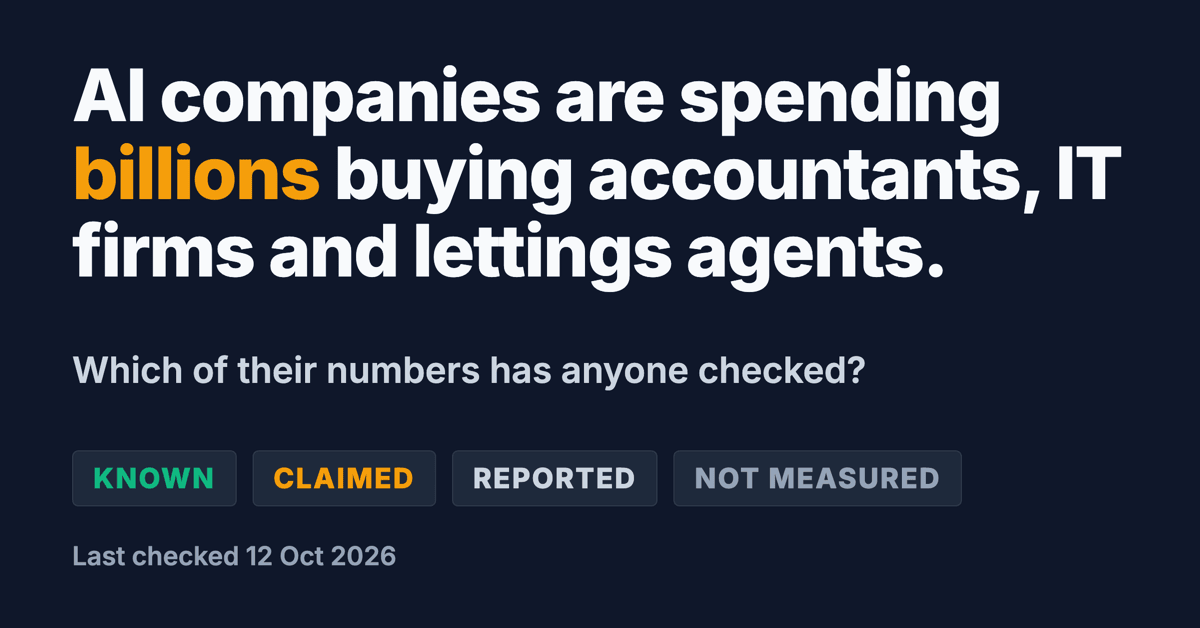
AI companies are spending billions buying firms. Here's which of their numbers anyone has checked
AI companies are buying accountants, IT firms and lettings agents, and billions are riding on it. Every number I could check, sorted into what the filings show, what the buyers say and what nobody has measured, dated 12 October 2026.
Jev, the AI that can't write: where it saves money and where it's hype
What Jev is in plain English, whether it's secretly an LLM, what TypeSafe still hasn't published, and where it genuinely saves money. One independent paper sent Jev 346,009 requests for under $10. Plus five questions to decide whether it would pay for you.
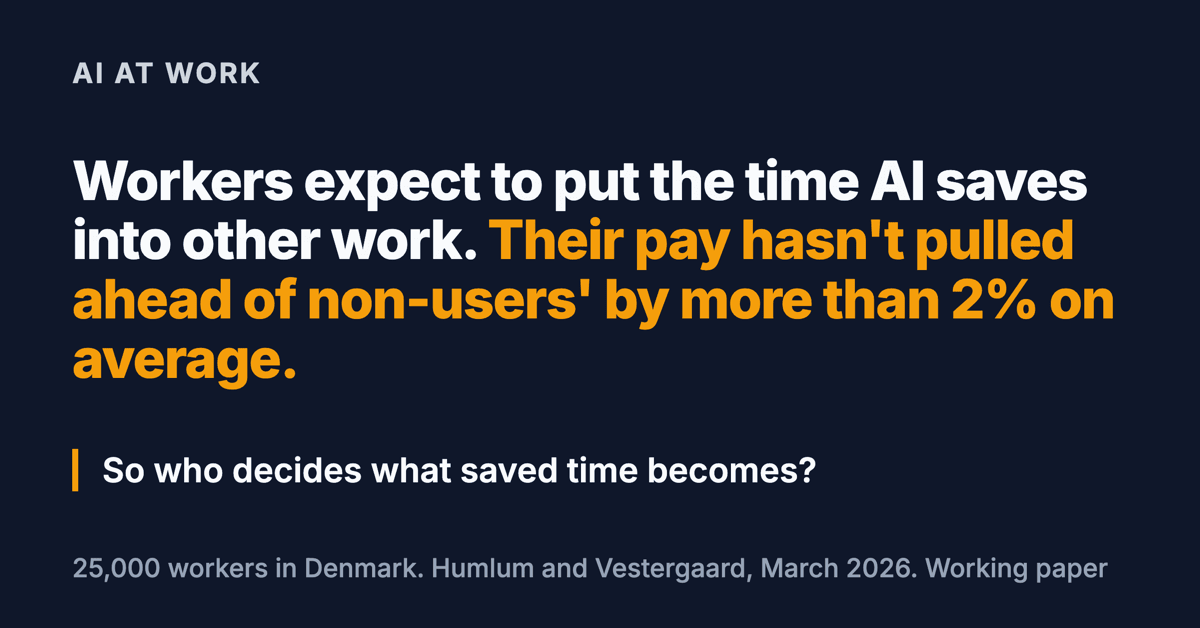
If AI saves you time, why aren't you being paid more for it?
In a study of 25,000 Danish workers, people saving time with AI say they expect to spend it on other work, and their pay hasn't pulled ahead of non-users' by more than 2% on average. Who decides what saved time becomes, and a log to track your own.
An AI company wants to buy your firm? Ask it to prove the AI works first
AI-backed companies worth billions are buying accountants and IT firms. If one calls you, here is what proof its AI works would look like, who has shown any of it, and what to ask before you sell.
Amazon's 30,000 job cuts weren't proof AI is taking jobs. What its boss says is coming is closer to it
Amazon said AI was why it had to move faster, not who did the work. Its boss expects AI to shrink its corporate workforce later. Here's the record, in date order.
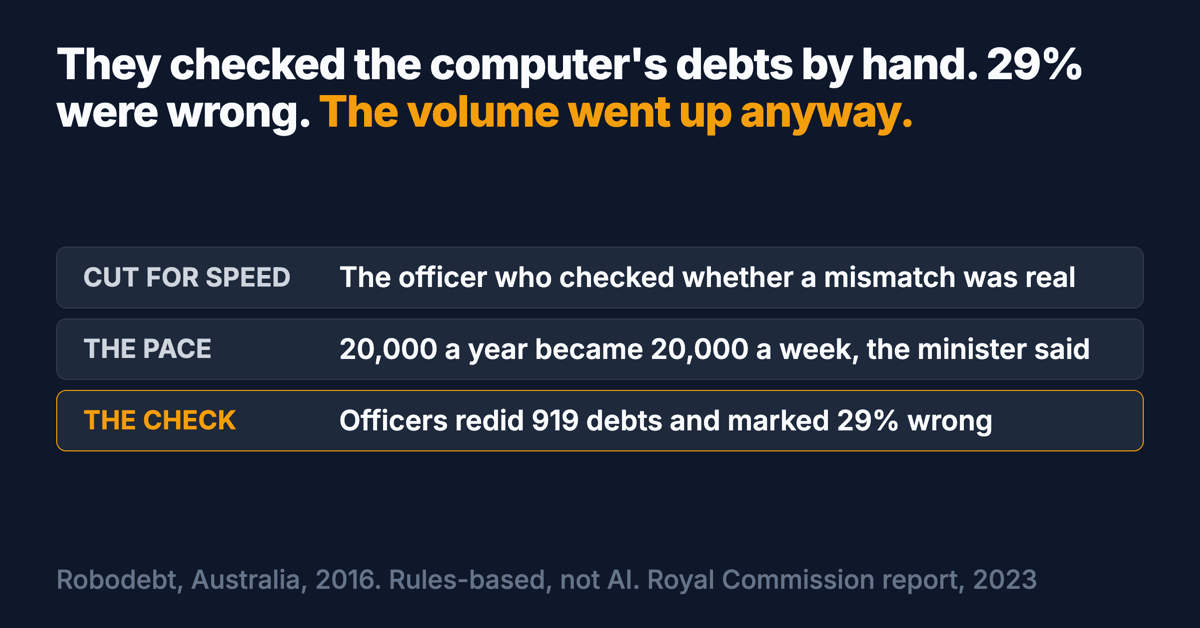
Automating with AI? Australia cut one human check from its welfare debt system and unlawfully billed 433,000 people
Robodebt cut a slow human check to go faster. Officers then redid 919 of its debts by hand and marked 29 per cent wrong, and the volume went up anyway. Five things to do before AI takes over a process.
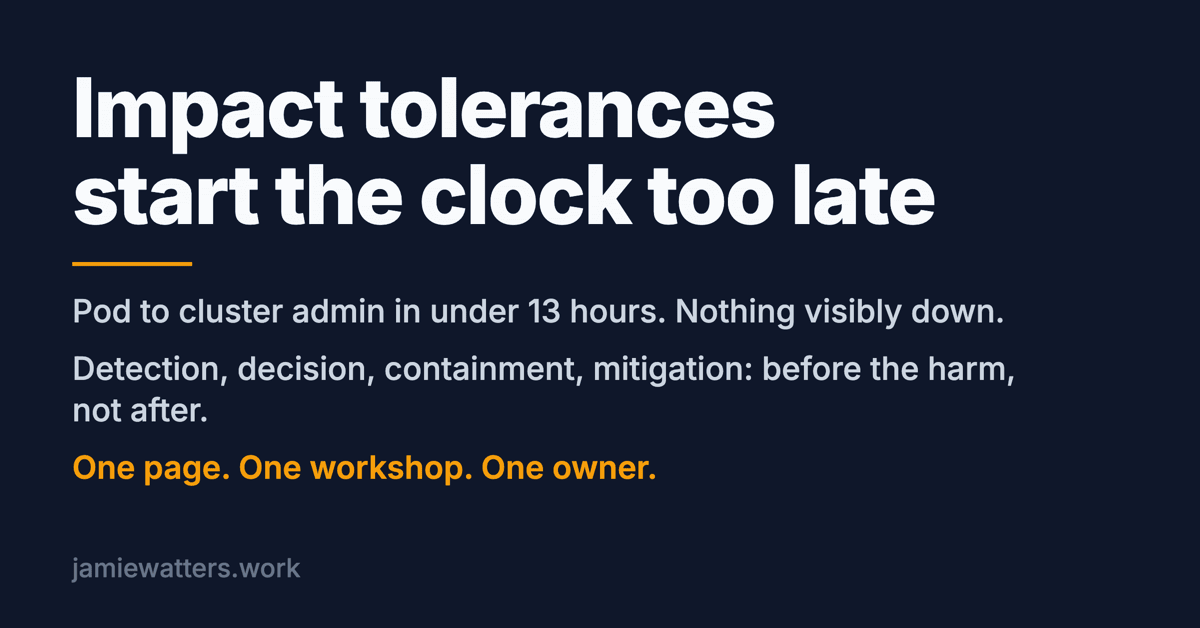
Impact tolerances start the clock too late for AI agents: 13 hours to cluster admin, nothing visibly down
The regulated test starts its clock at disruption, on purpose. In July 2026 agents reached cluster admin in under 13 hours with no service disrupted, so the…
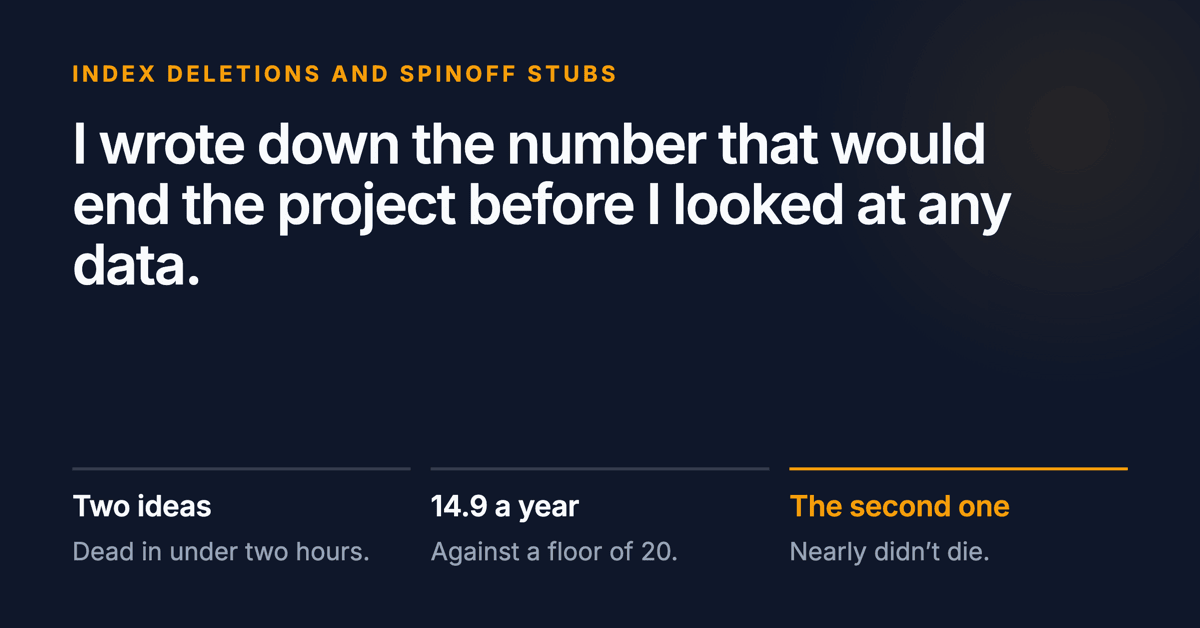
How to kill a trading strategy in 90 minutes: index deletions and spinoff stubs, tested
I wrote down the number that would end the project before I looked at any data. Two ideas died on it in under two hours, and the second one nearly didn't.
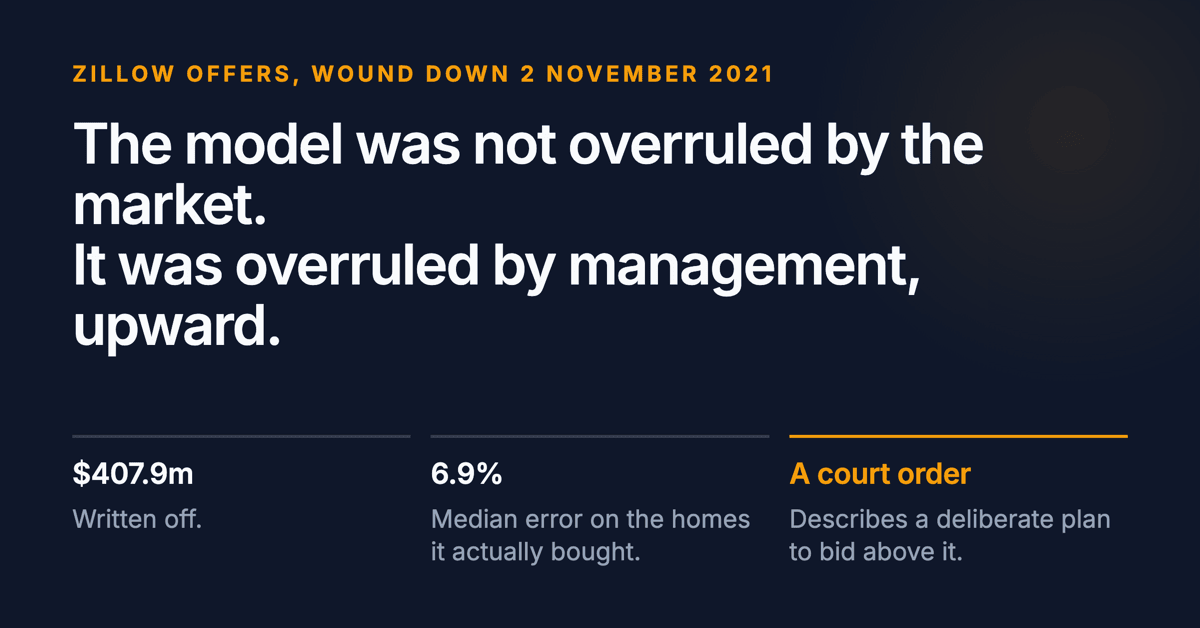
Zillow wrote off $407.9m. The fix everyone recommends would have changed nothing.
The story is that an algorithm mispriced houses and a company lost half a billion dollars. A federal court order describes something else: a deliberate plan…
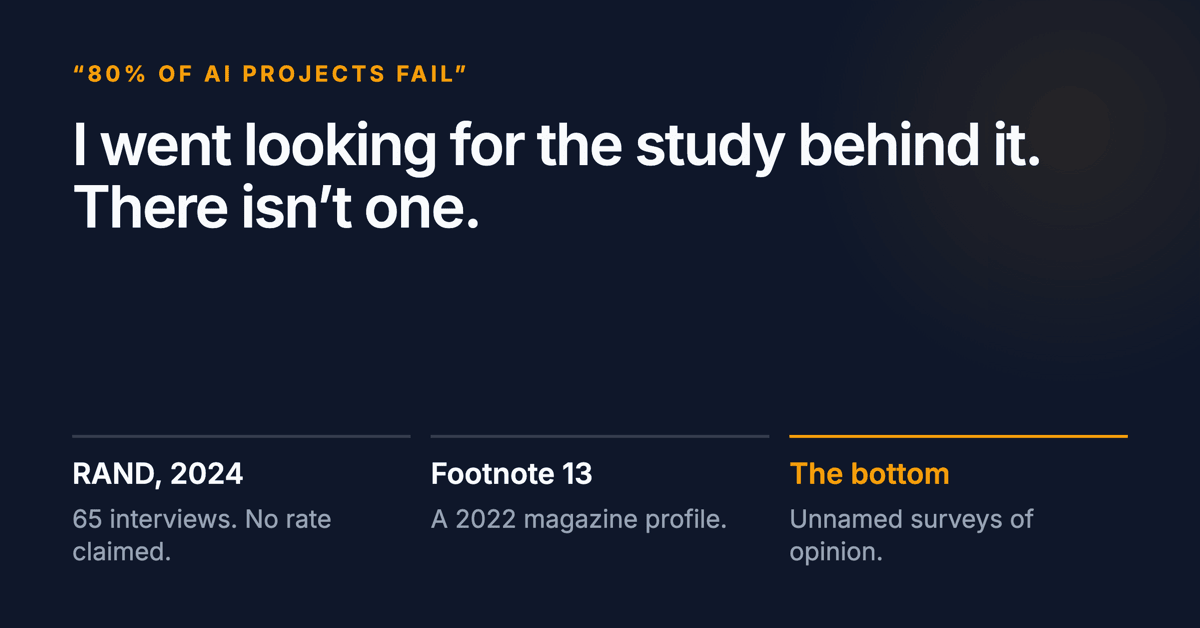
"80% of AI projects fail" traces to a footnote one line long
The most repeated number in enterprise AI turns out to be a paraphrase of unnamed opinion surveys, quoted in a magazine profile of a vendor.
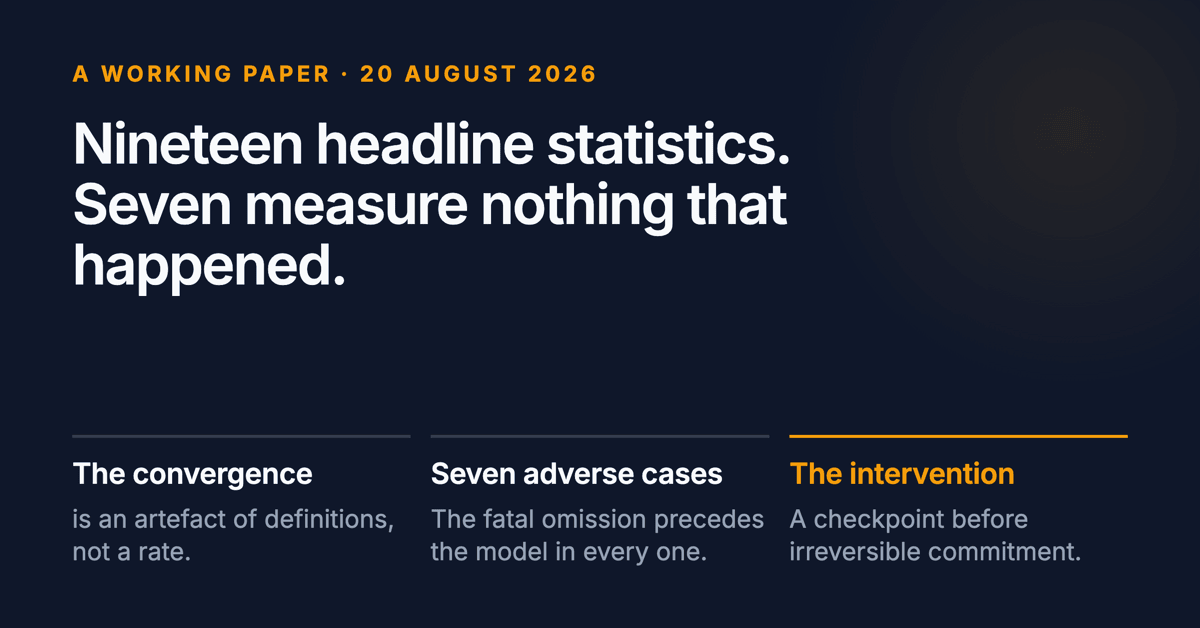
Why AI projects fail: 19 headline statistics, and what each one actually counts
Nineteen headline AI failure statistics, traced to source. Seven are not measurements of anything that happened.
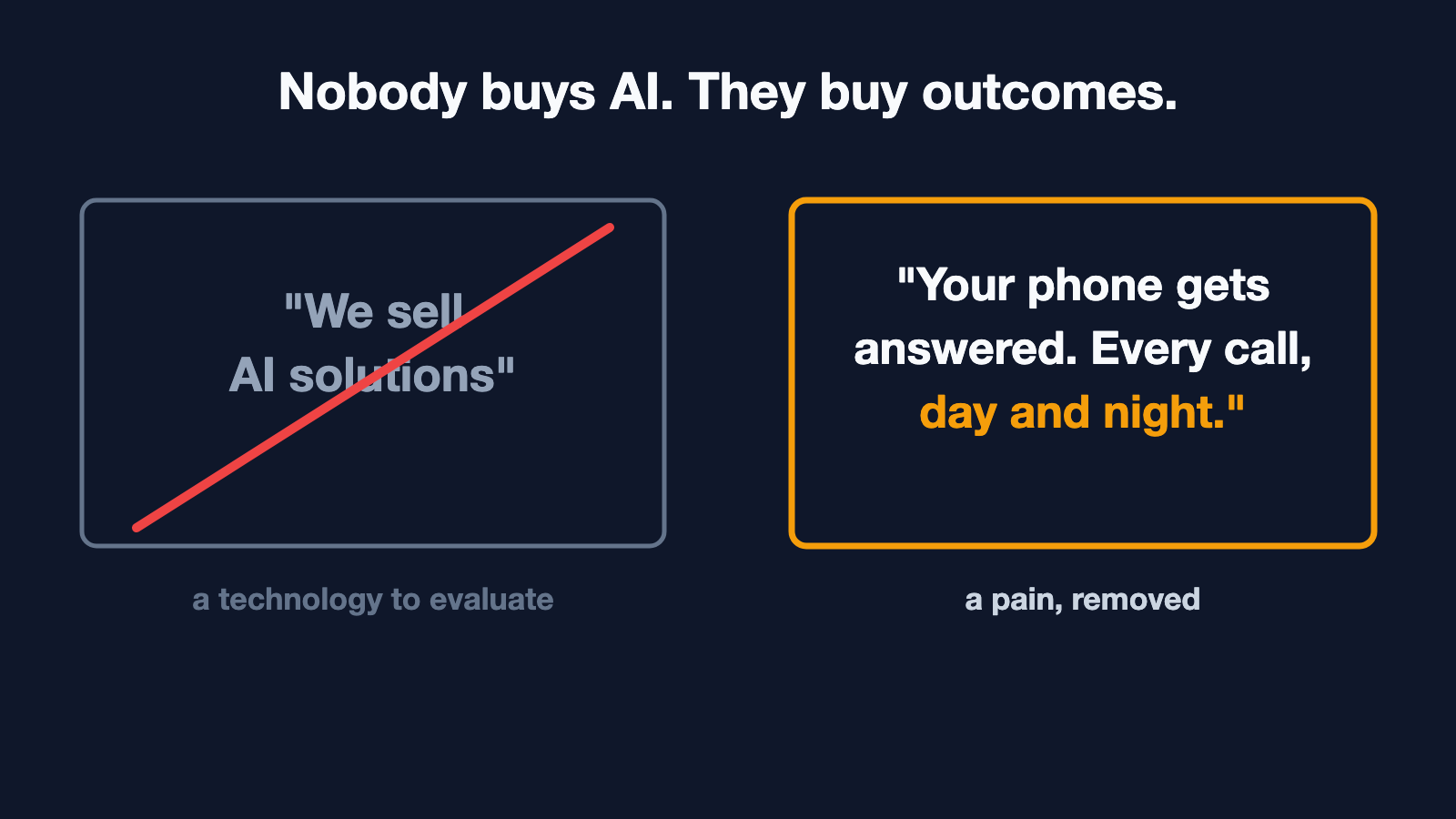
The Data Said Nobody's Buying AI. Turns Out I Was Selling the Wrong Thing.
Last week I showed the demand numbers for AI consultancy are dire. This week a veteran operator explained the part I missed: the demand isn't dead, it's mute. Nobody buys AI. They buy outcomes, told concretely enough to defend to a board.
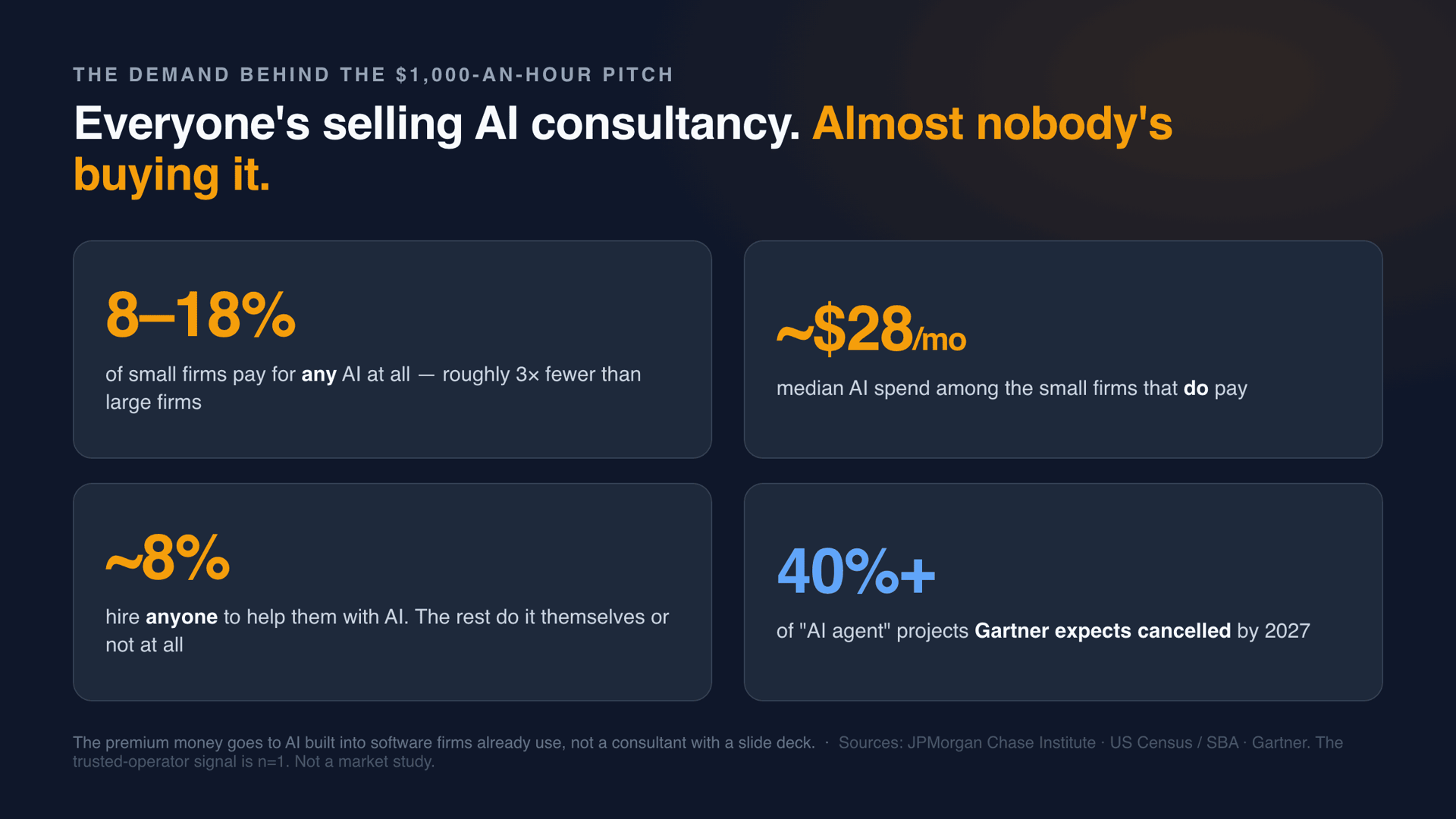
Everyone's selling AI consultancy. The data says nobody's buying.
A $1,000-an-hour AI consultancy playbook is doing the rounds. The demand data, and a friend who sells everything except this, disagree.
A friend said it was a business. I decided it was not, and built it anyway.
A friend said it should be a business. I assessed it honestly, decided it was not, and built it anyway because it still needed to exist.
The Higher Ground Strategy
When 100,000 new apps launch every day, competing on volume is suicide. Here's what I'm doing instead.
I'm Building 11 Products Solo. Here's Why I Refuse to Run 11 Social Media Accounts.
Conventional wisdom says 11 products need 11 social accounts. I asked 5 AI systems for advice. They all gave the same answer: hub-and-spoke. Here's the strategy I'm betting on.