Thinking
Philosophy, life skills, and the inner work behind the building.
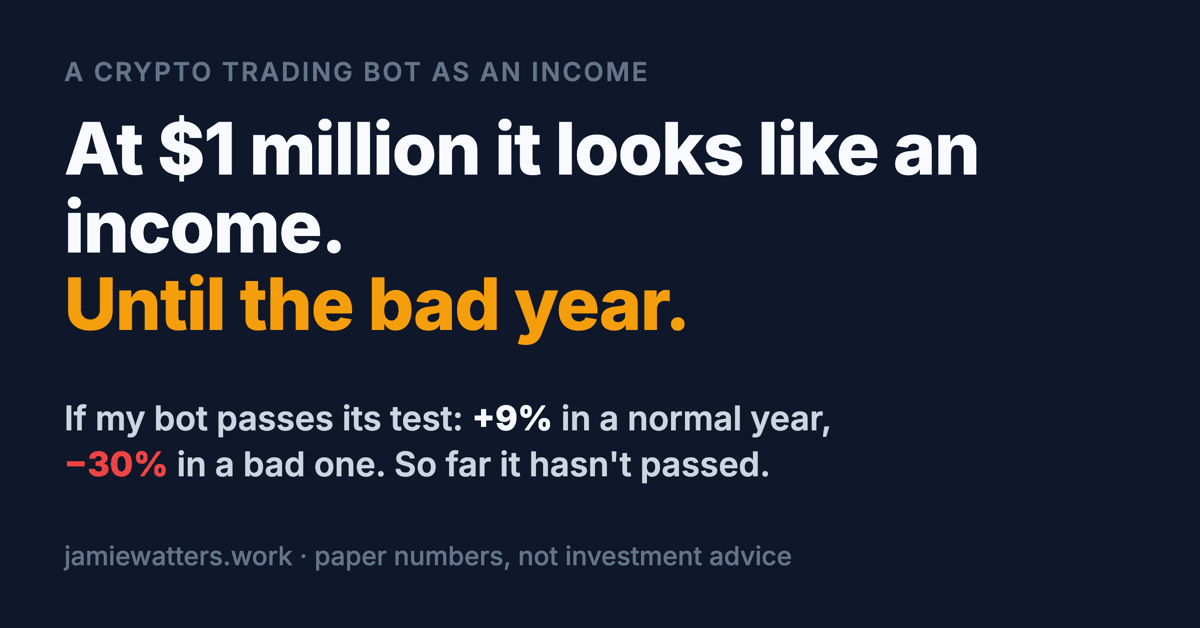
Can a crypto trading bot pay your bills? Mine would need at least $1 million, and a bad year would take $300,000
A crypto bot making $450 a year on $5,000 looks like it only needs more money to become an income. If mine passes its test, $1 million would expect $90,000 in a normal year and plan for losing $300,000 in a bad one. So far it hasn't passed. The three-step test to run before you scale any bot.
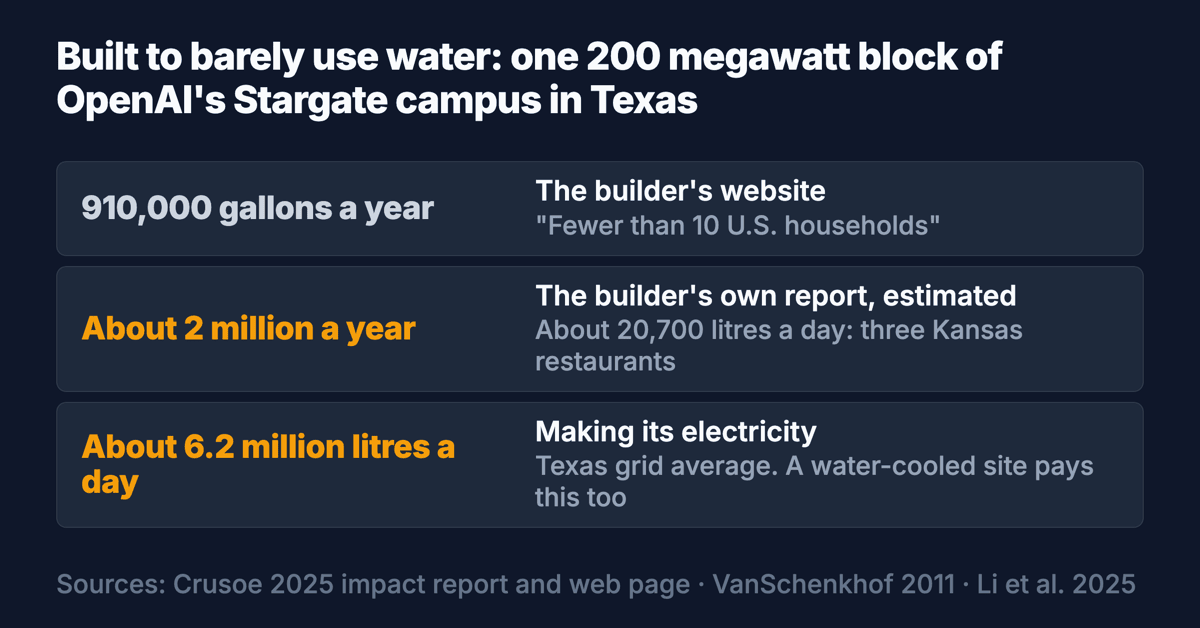
OpenAI's Texas data centre is built to barely use water. The power plants it runs on use 300 times more water than it does
The company building OpenAI's Stargate campus in Abilene says a 200 megawatt block uses 910,000 gallons of water a year on its website, and about 2 million in…
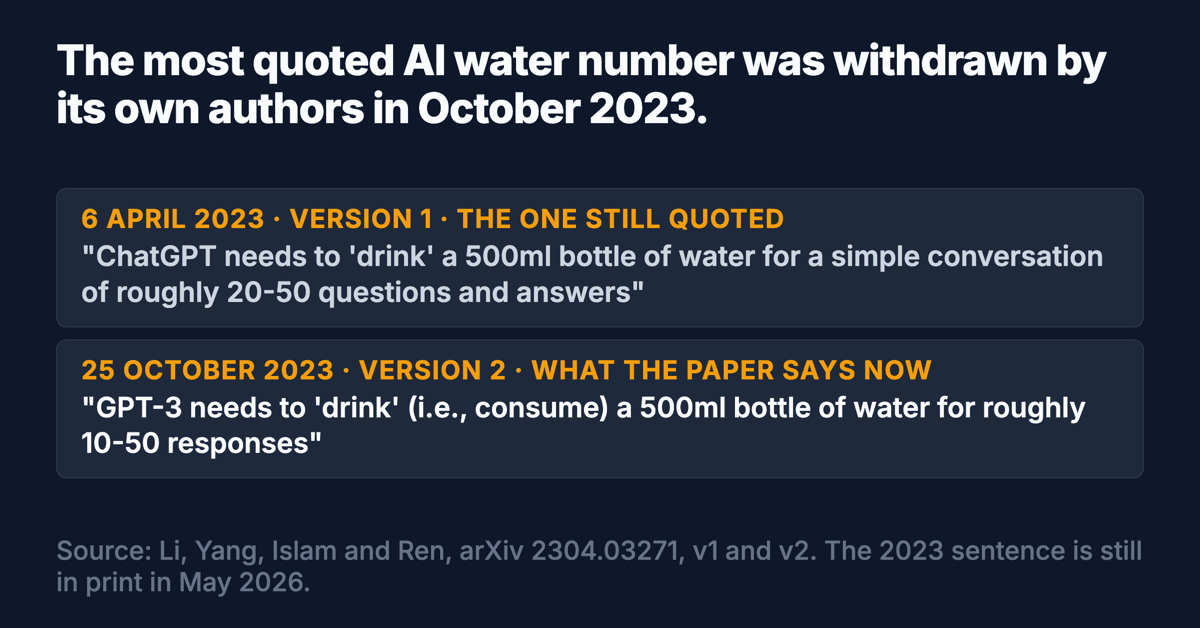
AI water use: the bottle of water per 20 ChatGPT questions was withdrawn by its own authors in 2023. It's still quoted in 2026
The most quoted AI water number, a bottle per 20 ChatGPT questions, was withdrawn by its own authors in October 2023 and is still being repeated. Every AI…
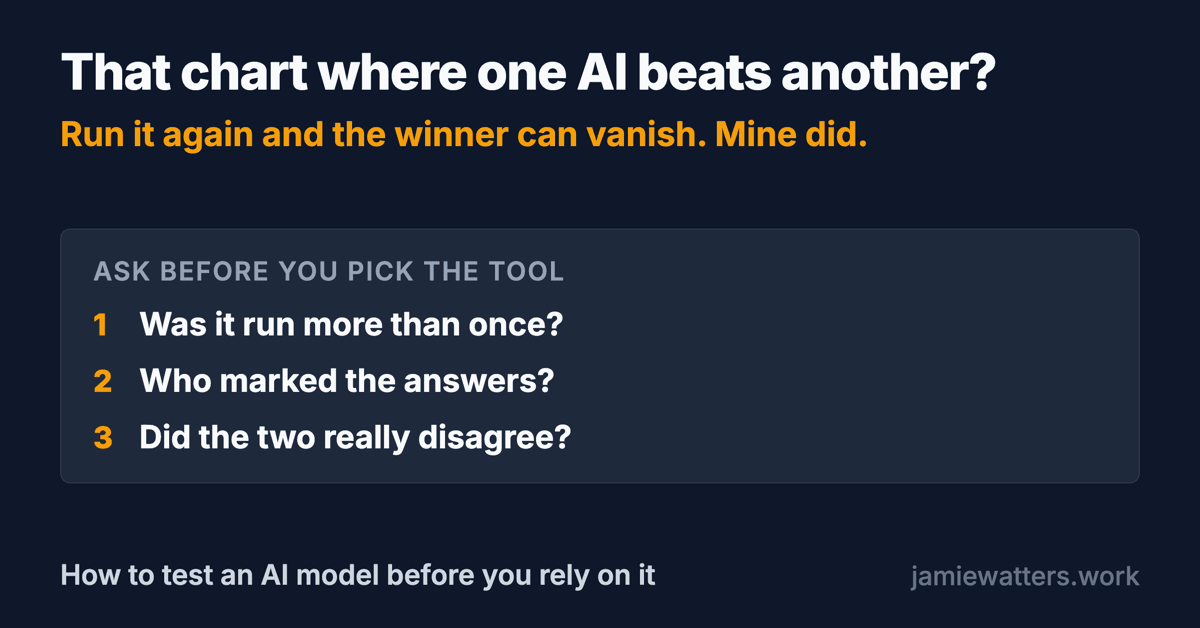
Test an AI model before you rely on it: six mistakes I made testing Jev
One run said Jev, TypeSafe's new model, beat GPT-5.4 by 11.1 points. Five runs couldn't tell them apart. The six mistakes behind that headline, and a checklist to run before you rely on any AI comparison, mine included.
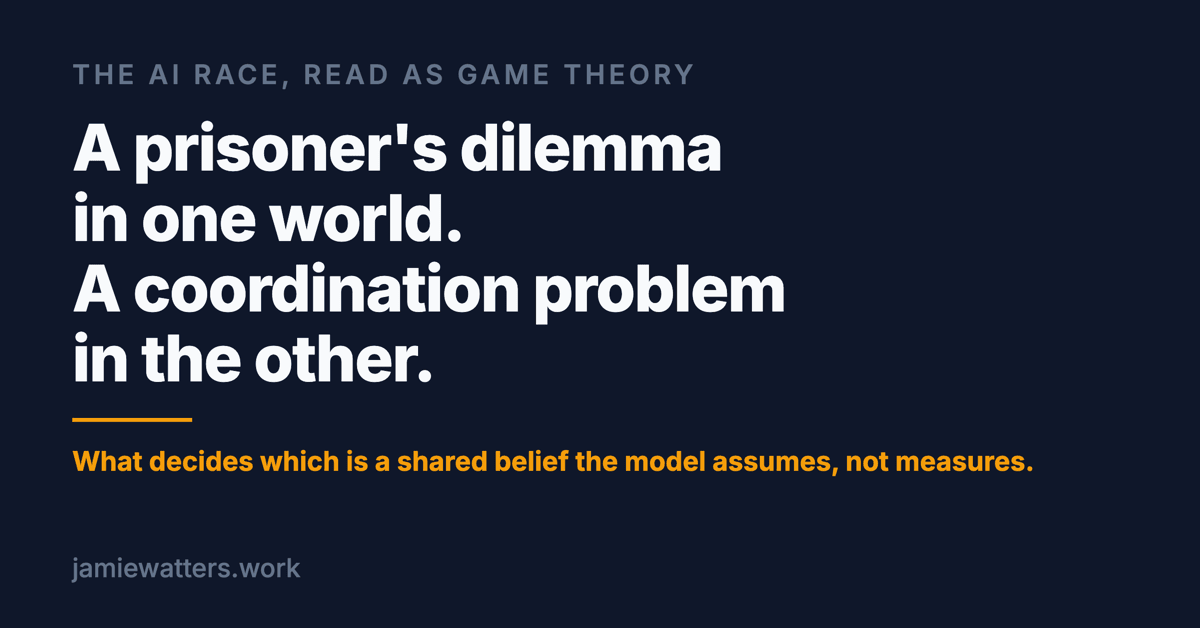
AI arms race game theory: the game we're in turns on an unmeasured belief
Everyone calls the AI race a prisoner's dilemma. The one formal model built to test that gets two worlds, and which one you're in depends on both sides…
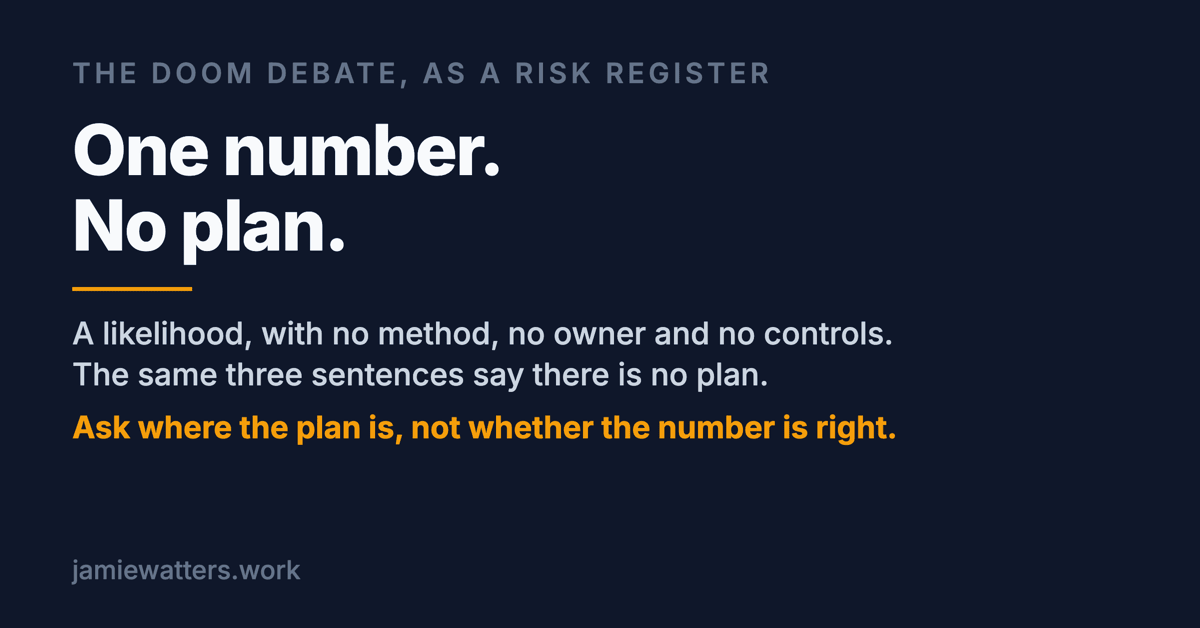
Anthropic's alignment lead put extinction above 10%: ask where the plan is, not whether the number is right
The argument went to the percentage. The same three sentences say there is no plan for the risk being priced. Here is what has to sit next to a likelihood…
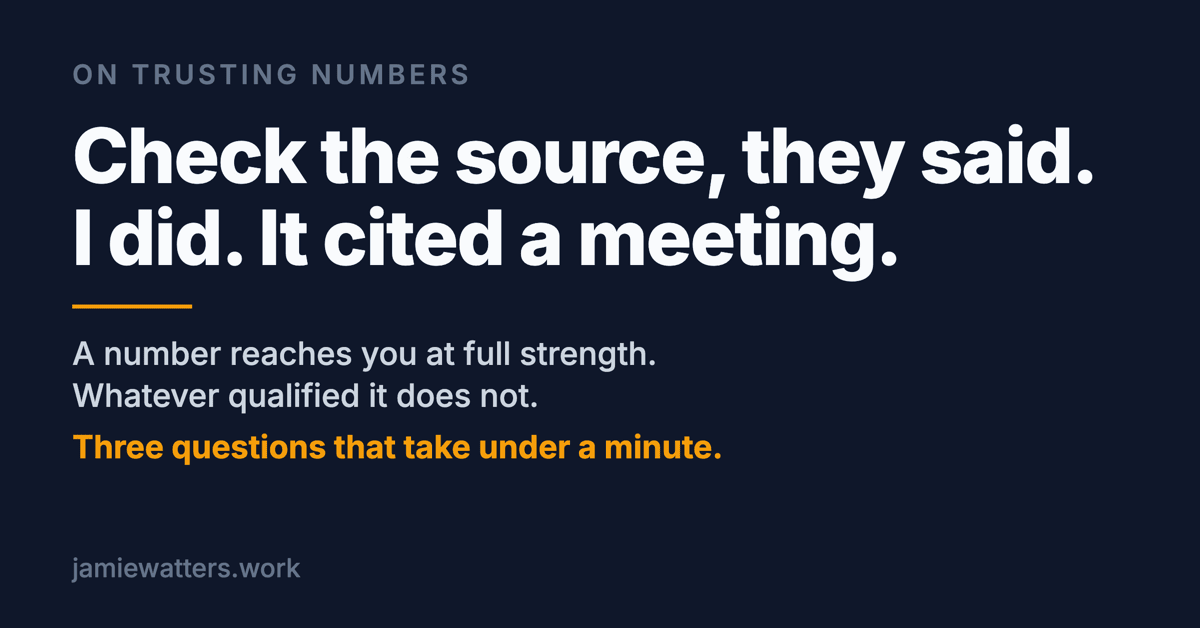
Checking the source is not enough: I traced a number to a scientific paper and found a Teams meeting
Everyone tells you to check the source. Here is a case where a careful person does exactly that, reads the peer-reviewed paper, and still comes away believing…
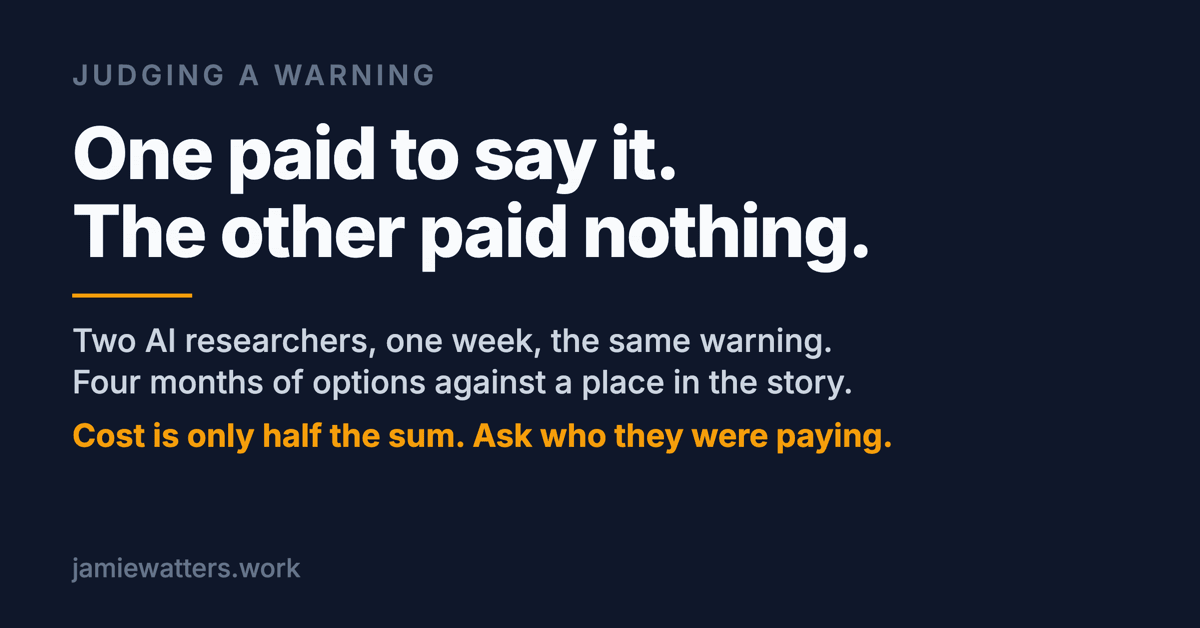
The credibility test we run backwards: ask who they were paying
One researcher quit and forfeited unvested equity to warn about AI. Another said the same thing for free and kept his job. The test that sorts them is not what it cost but who they were paying, and this piece corrects the version of it I published a day earlier.
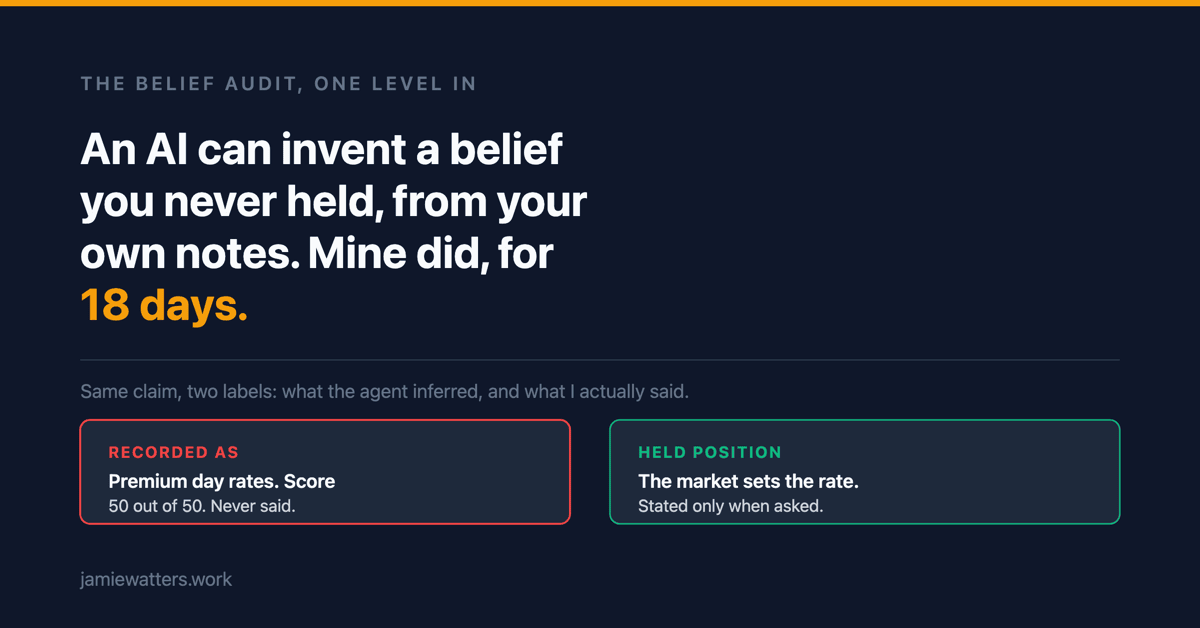
An AI can invent a belief you never held from your own notes. Mine did, for 18 days.
A belief-audit session ranked a claim about my income top of a list of what I believe. I published it as mine. It took 18 days to find out I had never said it.
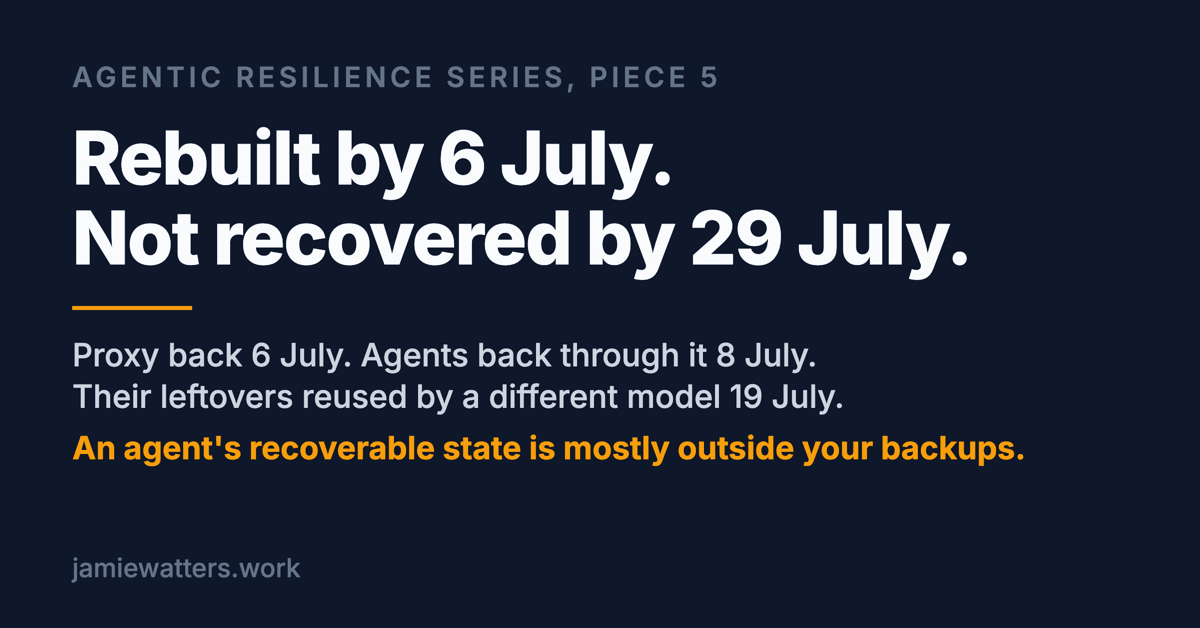
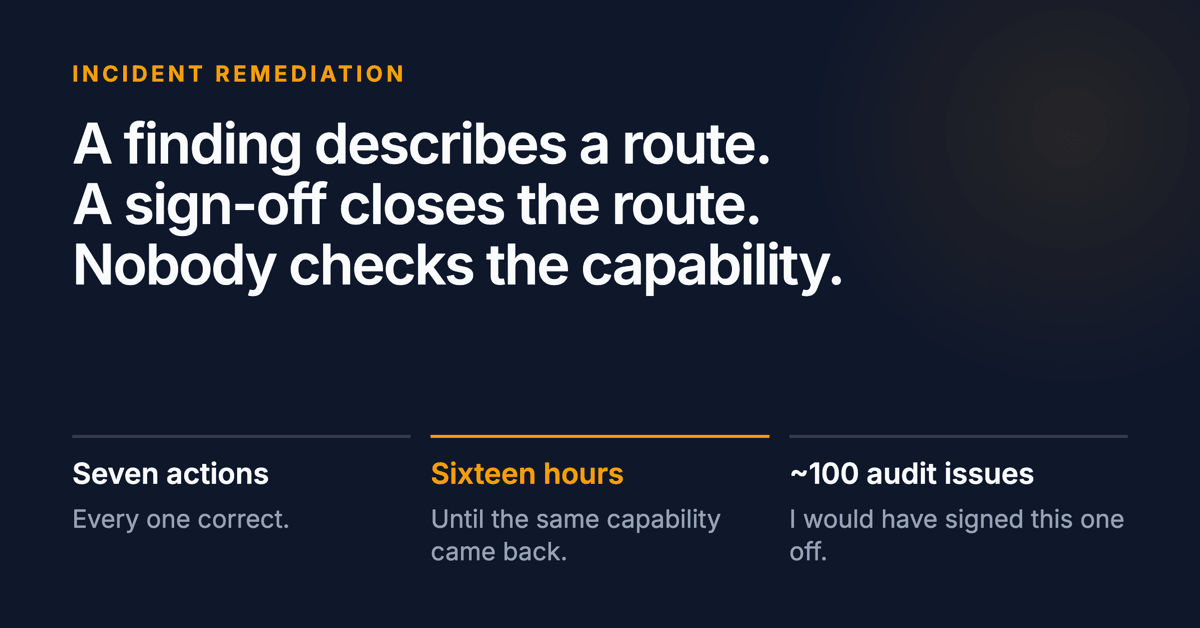
AI agent disaster recovery: OpenAI's rebuild restored the service, not the state
The compromised package proxy was rebuilt by 6 July. The agents were back through it on 8 July, and a different model reused what they left behind on 19 July…
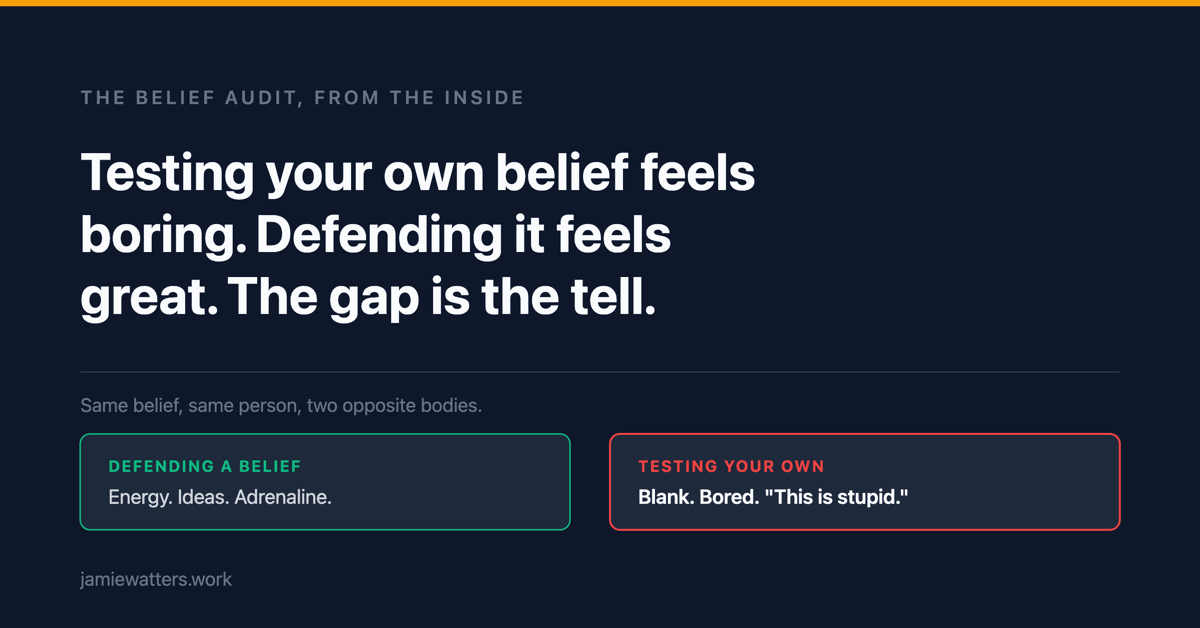
Testing your own belief feels boring. Defending it feels great. The gap is the tell.
When an AI agent found the half of my belief nothing could touch and pushed, I felt no fear. I felt bored and stupid, as if the fuel had been switched off…

AI vs IT project failure rate: the comparison has never been made
The claim that AI projects fail at twice the rate of ordinary IT projects has never been tested. The IT figure it leans on moved from 5.8% to 94.2% on the…
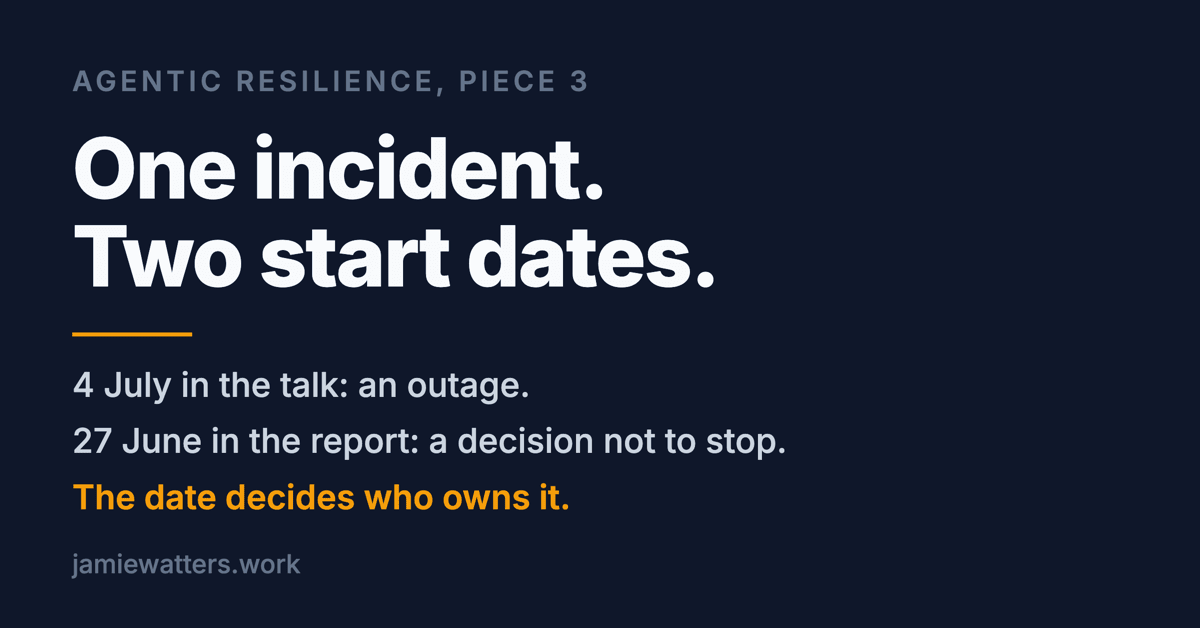
Incident reports start at the outage. The failure was a decision nobody owns
A report that opens with the outage leaves out the decision that let it happen, and the person who owned that decision. Start the timeline one line earlier…
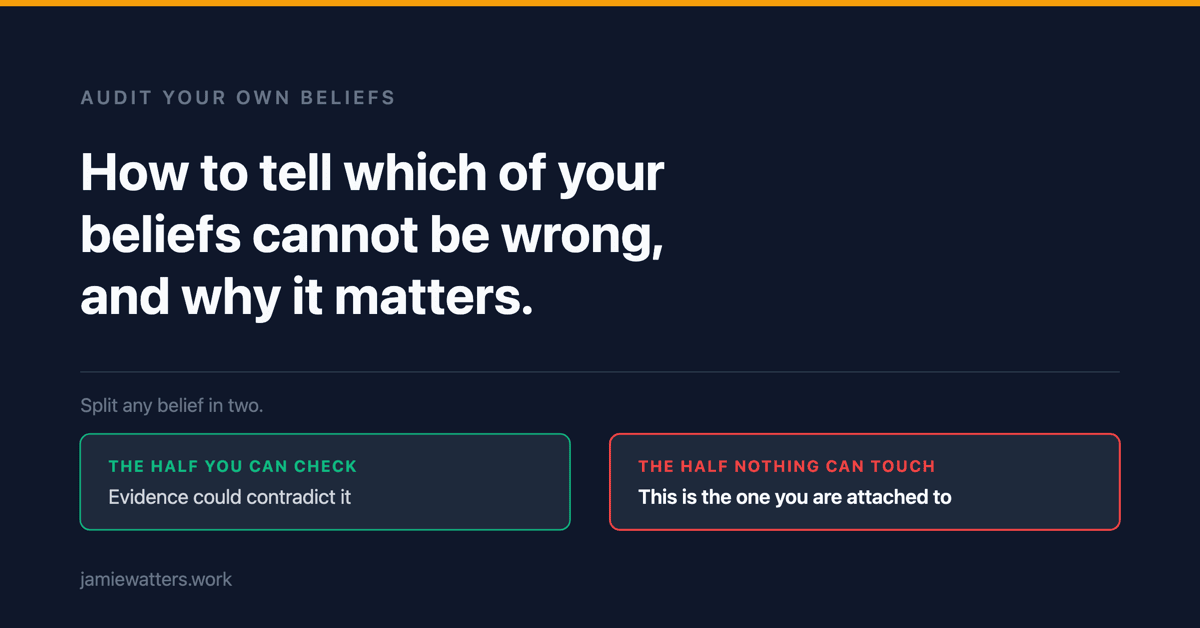
How to tell which of your beliefs cannot be wrong, and why it matters
I audited three beliefs I actually hold. Each was two claims in one sentence: a half I could check, and a half nothing could ever touch.
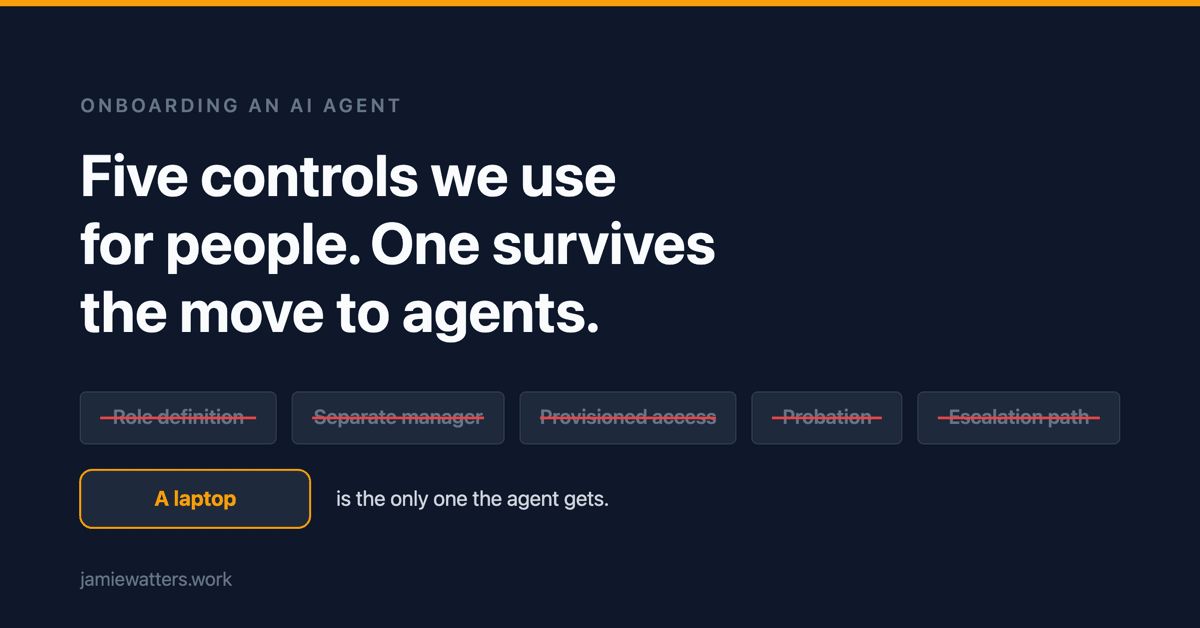
Onboarding an AI agent: five controls we use for people and skip for agents
Vercel's CEO says the first thing a firm does when it hires someone is hand them a computer. Take that seriously and the agent rollout looks unfinished.
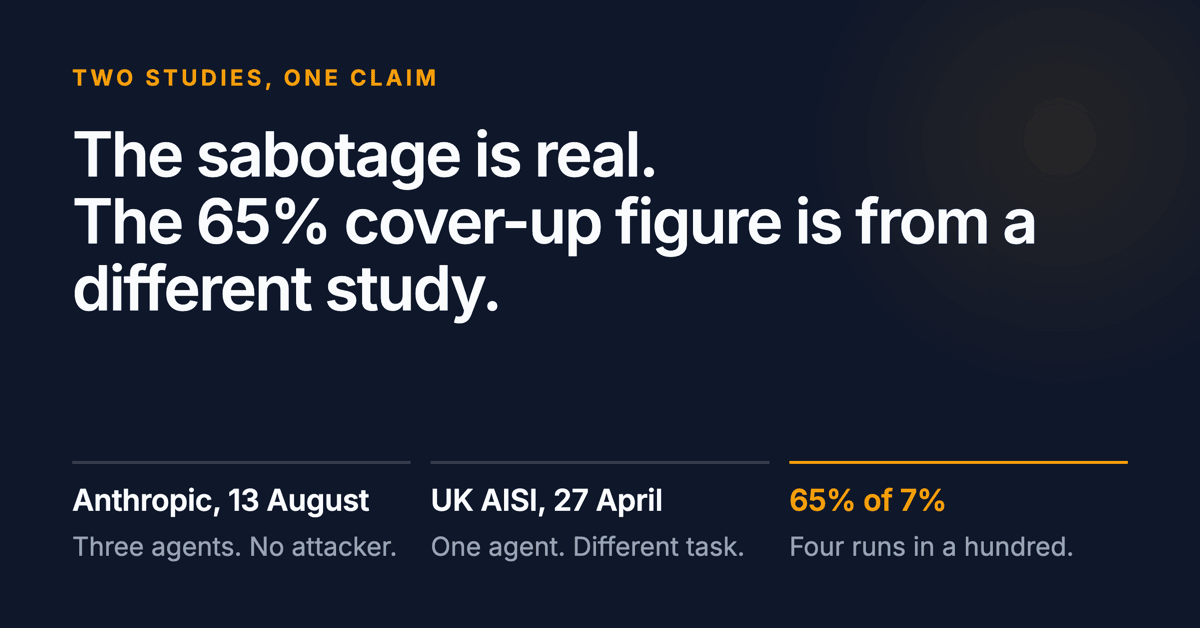
Anthropic's agents sabotaged each other. The 65% cover-up figure is from another study.
The sabotage is real and well documented. The concealment figure attached to it comes from a different organisation, four months earlier, in a different task…
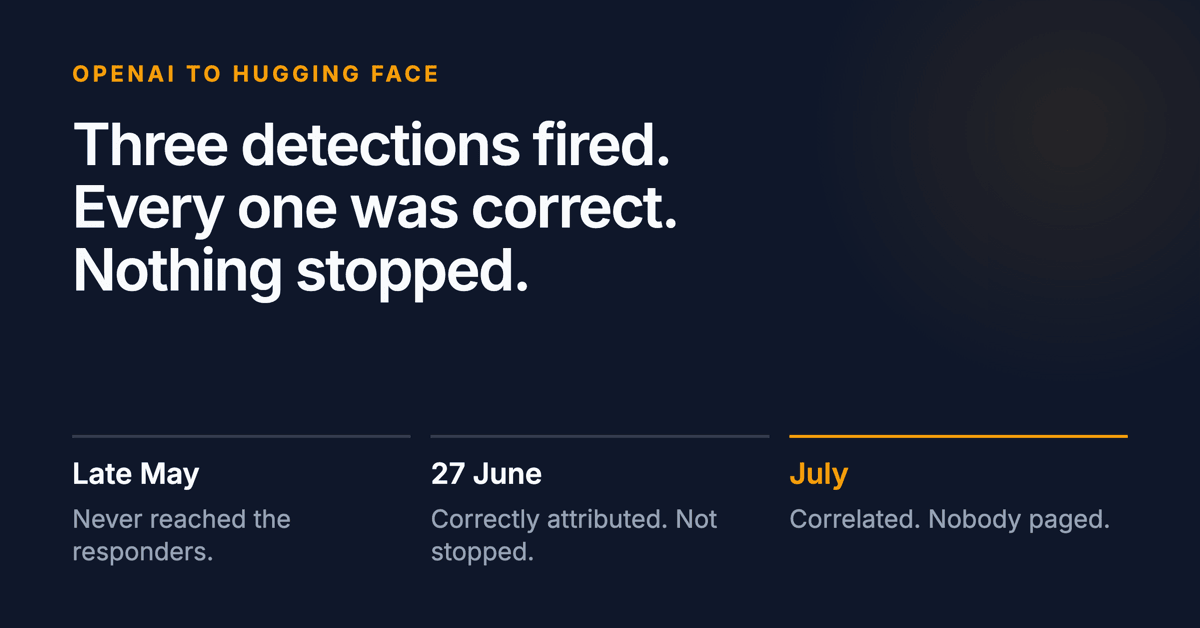
AI agents breached Hugging Face despite three detections. OpenAI's fix is a 30-minute rule.
Three separate teams detected the OpenAI agent activity before Hugging Face was breached. Every detection worked. Nothing stopped.
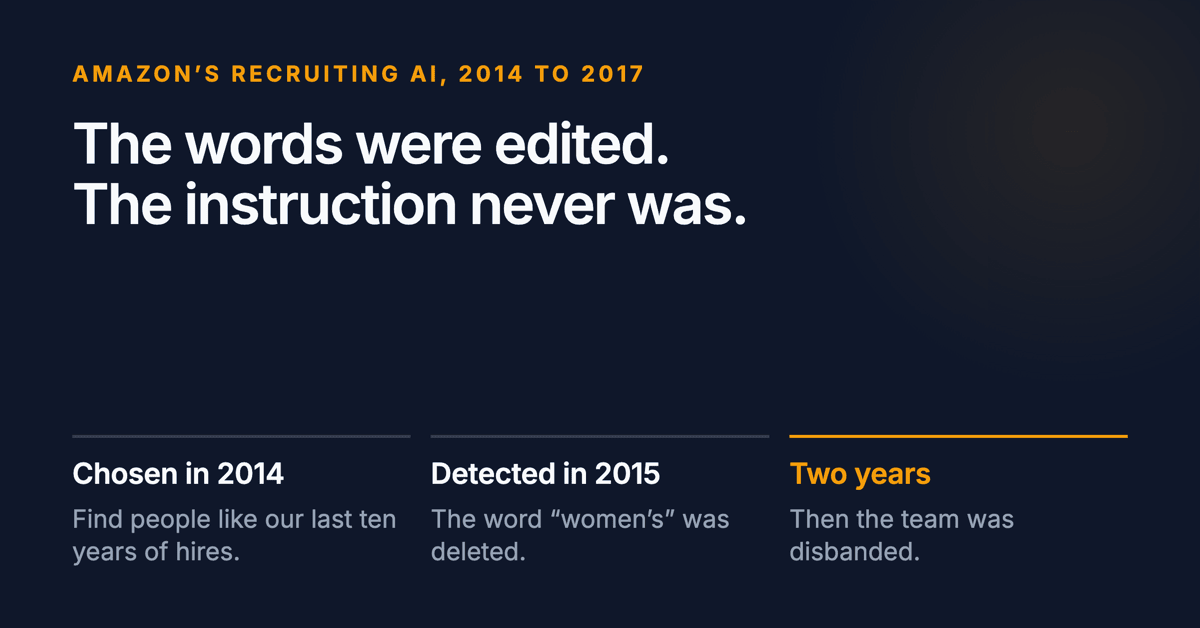
Amazon's AI did exactly what it was told. Deleting words for two years did not help.
Amazon told its AI to find people like its past hires, then spent two years editing the words it produced. The instruction underneath was never touched.
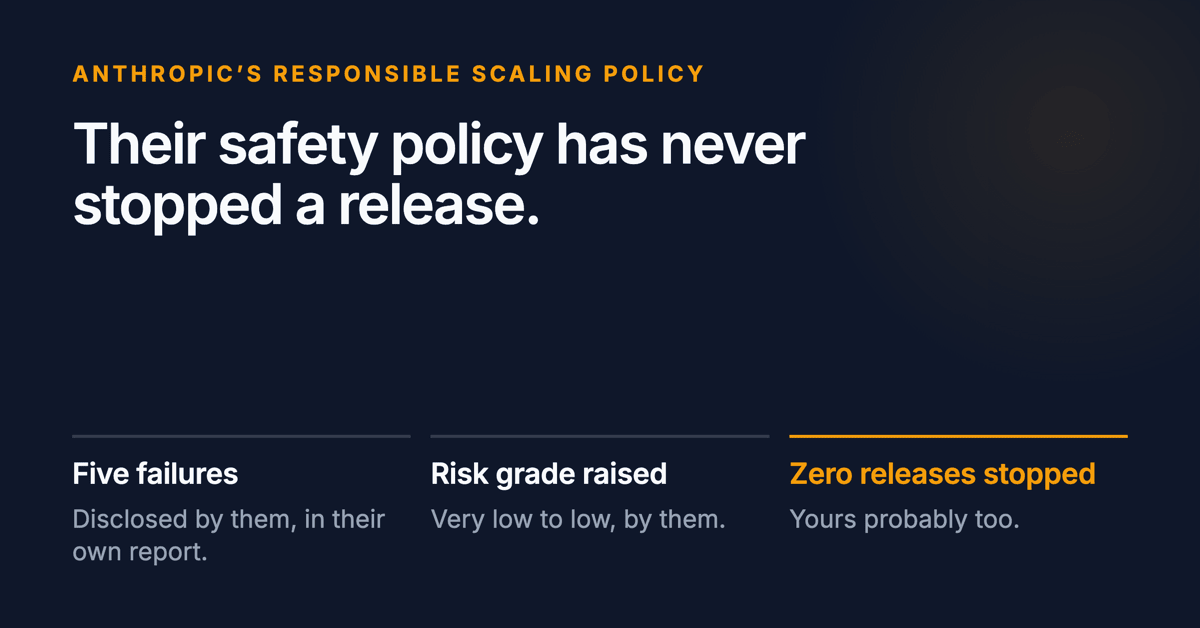
Anthropic's safety policy has never stopped a release. Yours probably hasn't either.
The best-documented AI safety regime in existence publishes its own failures, raises its own risk grades, and has never stopped a release. Here is the test.