AI
Working with AI, building with it, and thinking about where it goes.
The world's AI laws disagree. Four duties keep turning up anyway
Where AI regulation stands in October 2026 across the EU, the UK, the US, China and the rest of Asia: what binds now, what lands by 2028, where the rules contradict each other, and the four duties that keep recurring. The key dates re-checked at source on 14 October.
Bosses see no gain from AI, staff swear it saves time. What the evidence says works
What the evidence says about putting AI to work in an organisation: who does the implementing and what each way costs, finding the real process, deciding what AI does, testing it, measuring it, and what it does to people. Every claim graded, with ten cases checked by someone other than the vendor.
The usual signs that AI is working can mislead
What staff say, what bosses see and the person checking the AI's work can all tell you AI is working when it isn't. Hospitals, airports and banks already have better tests. Here they are, as six steps for one process.
How to make AI pay off at work: the job of the engineers Anthropic sends into companies
Forward deployed engineers are the engineers AI firms like Anthropic send to work inside companies. What they do, their four moves as a plan you can copy, and why mapping the work gets four weeks, not forever.
AI companies are spending billions buying firms. Here's which of their numbers anyone has checked
AI companies are buying accountants, IT firms and lettings agents, and billions are riding on it. Every number I could check, sorted into what the filings show, what the buyers say and what nobody has measured, dated 12 October 2026.
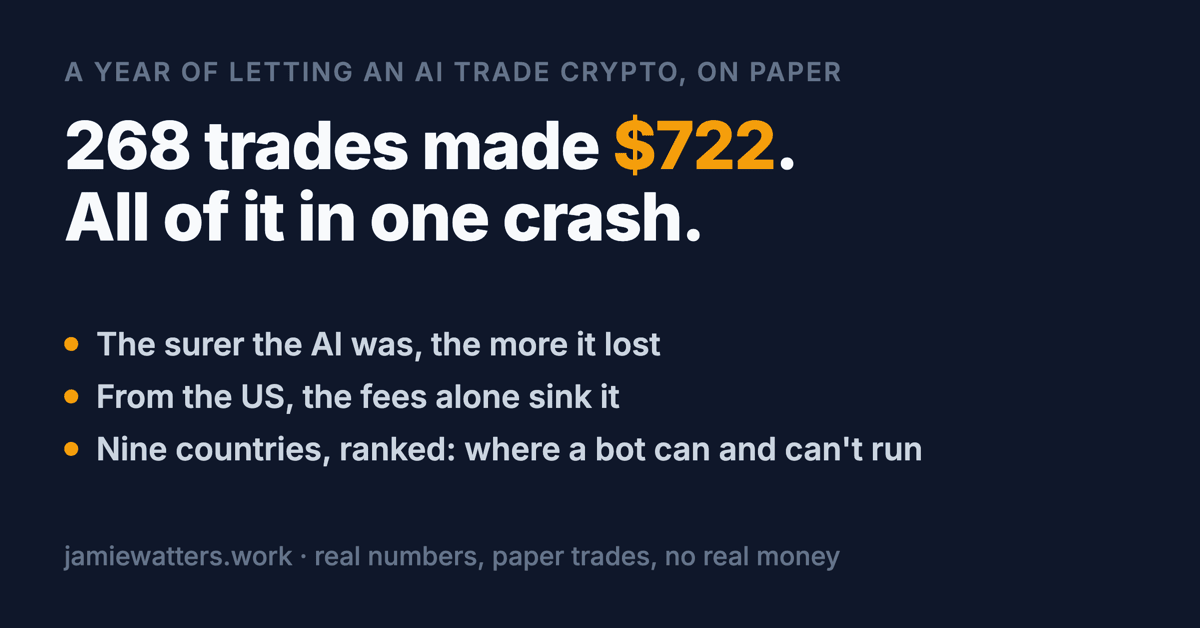
Thinking of buying a crypto trading bot? One year, 268 trades and $722 of profit say read this first
A year of an AI picking crypto trades, 268 of them on paper, made $722 and all of it in one crash. Fees, the exchange you can legally use and the country you live in decided more than the strategy. The five numbers to get before you build or buy a bot, and where it can't be run.
Jev, the AI that can't write: where it saves money and where it's hype
What Jev is in plain English, whether it's secretly an LLM, what TypeSafe still hasn't published, and where it genuinely saves money. One independent paper sent Jev 346,009 requests for under $10. Plus five questions to decide whether it would pay for you.
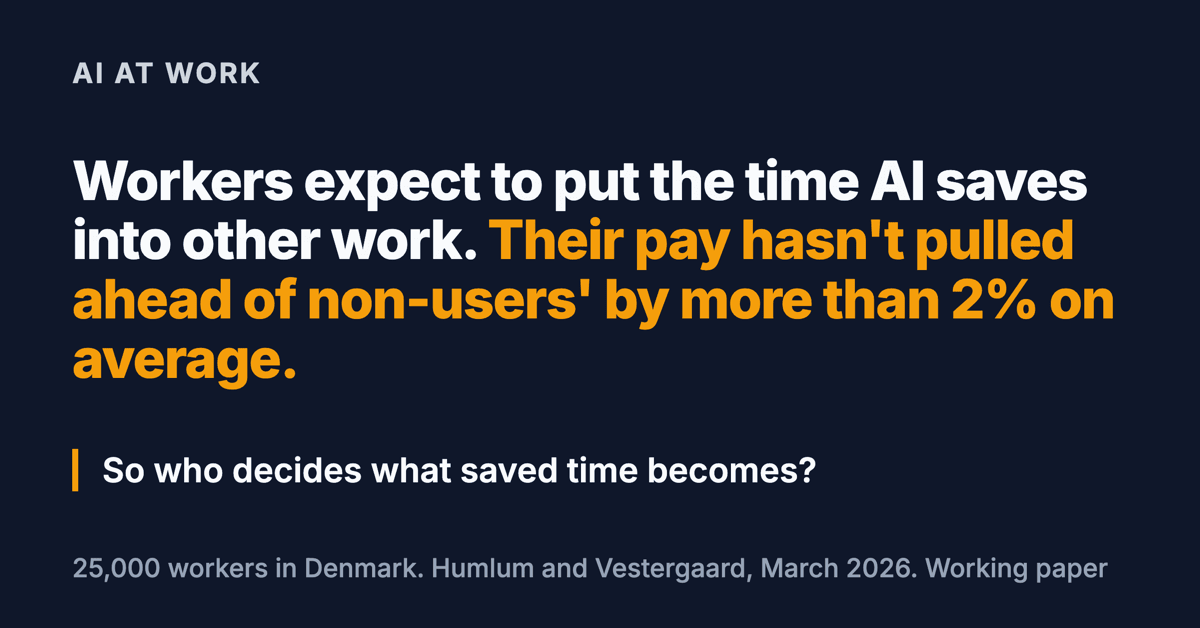
If AI saves you time, why aren't you being paid more for it?
In a study of 25,000 Danish workers, people saving time with AI say they expect to spend it on other work, and their pay hasn't pulled ahead of non-users' by more than 2% on average. Who decides what saved time becomes, and a log to track your own.
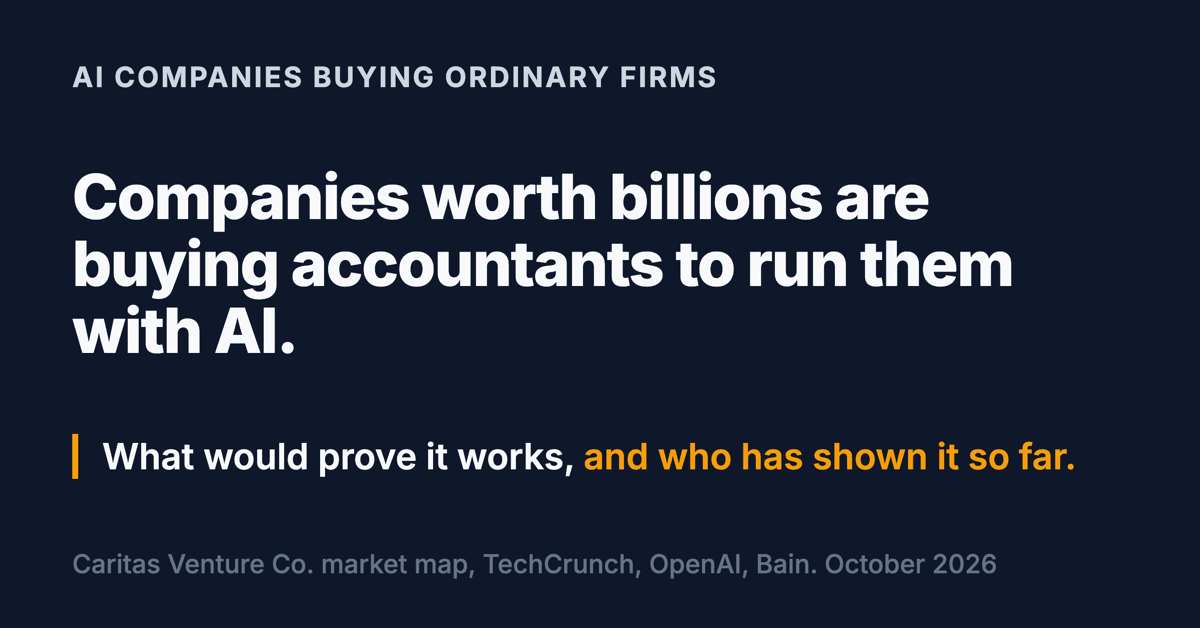
An AI company wants to buy your firm? Ask it to prove the AI works first
AI-backed companies worth billions are buying accountants and IT firms. If one calls you, here is what proof its AI works would look like, who has shown any of it, and what to ask before you sell.
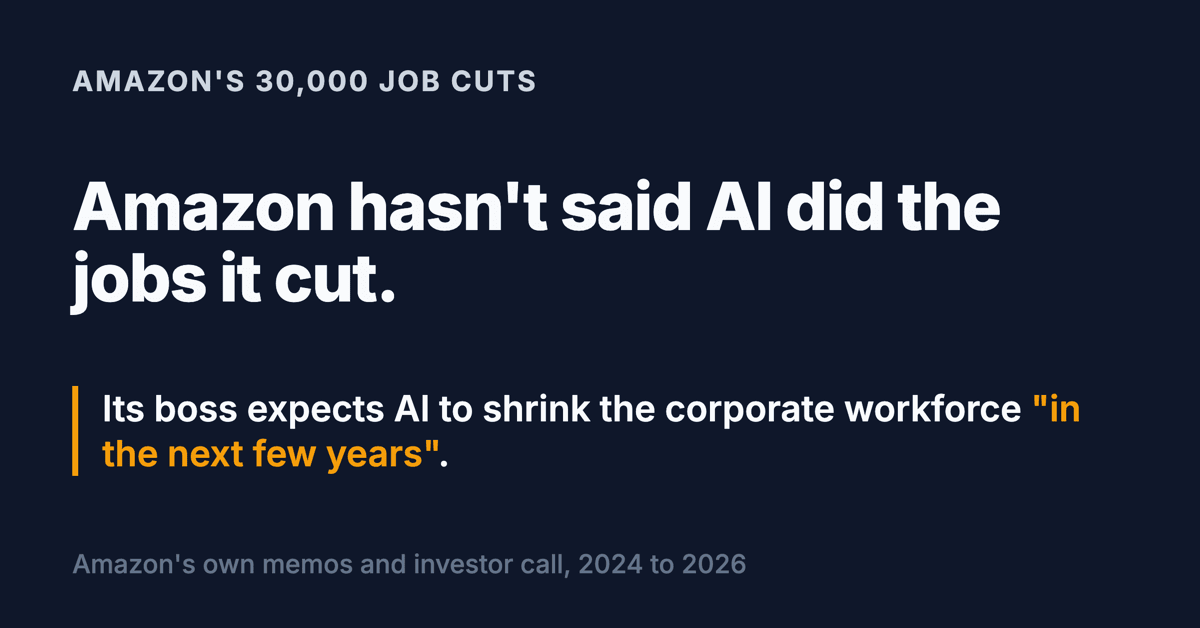
Amazon's 30,000 job cuts weren't proof AI is taking jobs. What its boss says is coming is closer to it
Amazon said AI was why it had to move faster, not who did the work. Its boss expects AI to shrink its corporate workforce later. Here's the record, in date order.
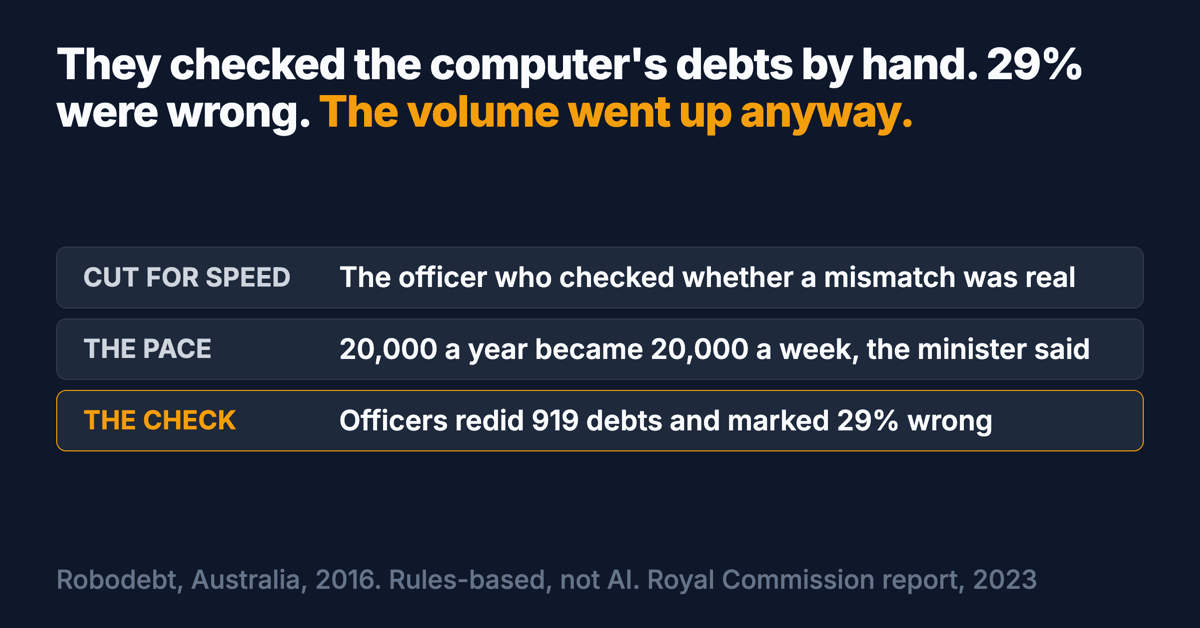
Automating with AI? Australia cut one human check from its welfare debt system and unlawfully billed 433,000 people
Robodebt cut a slow human check to go faster. Officers then redid 919 of its debts by hand and marked 29 per cent wrong, and the volume went up anyway. Five things to do before AI takes over a process.
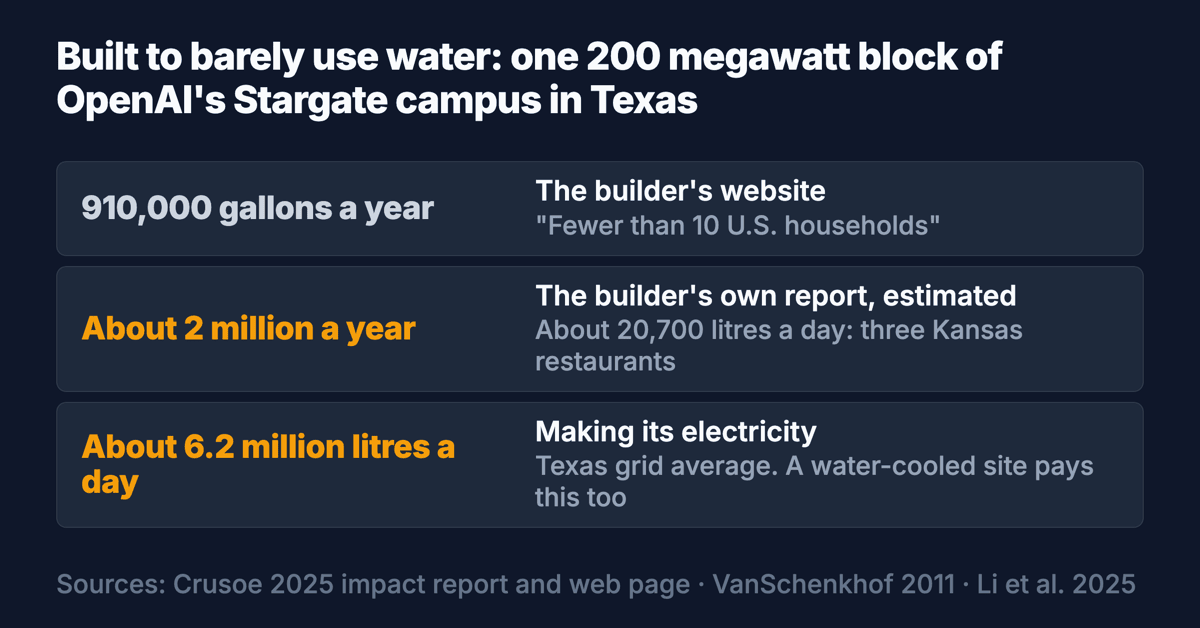
OpenAI's Texas data centre is built to barely use water. The power plants it runs on use 300 times more water than it does
The company building OpenAI's Stargate campus in Abilene says a 200 megawatt block uses 910,000 gallons of water a year on its website, and about 2 million in…
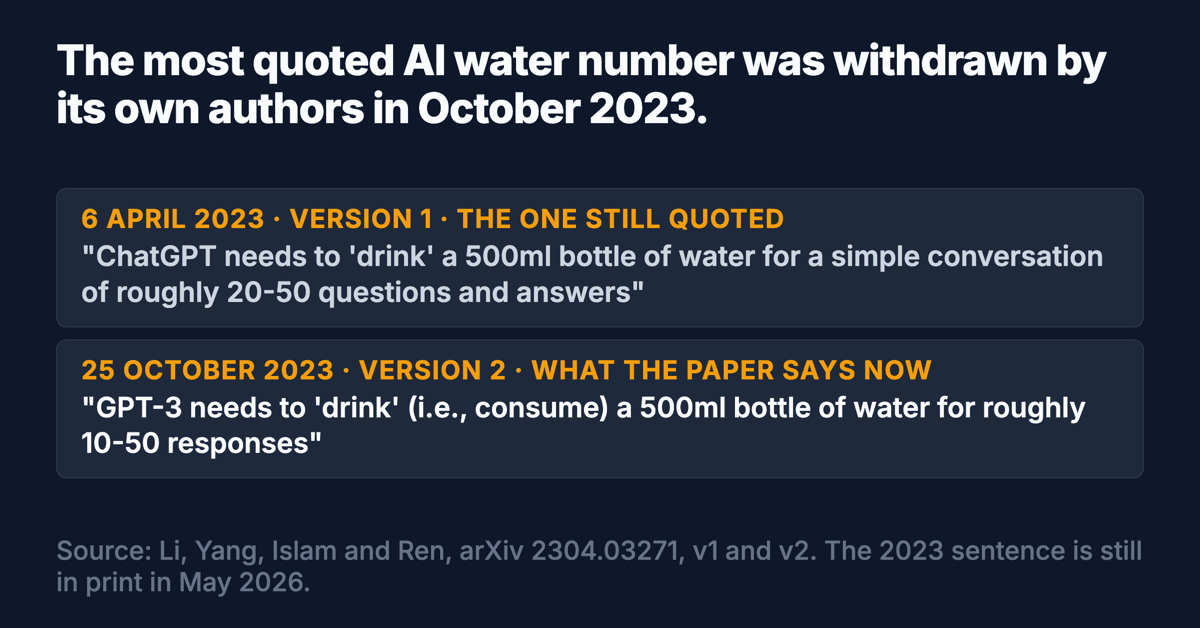
AI water use: the bottle of water per 20 ChatGPT questions was withdrawn by its own authors in 2023. It's still quoted in 2026
The most quoted AI water number, a bottle per 20 ChatGPT questions, was withdrawn by its own authors in October 2023 and is still being repeated. Every AI…
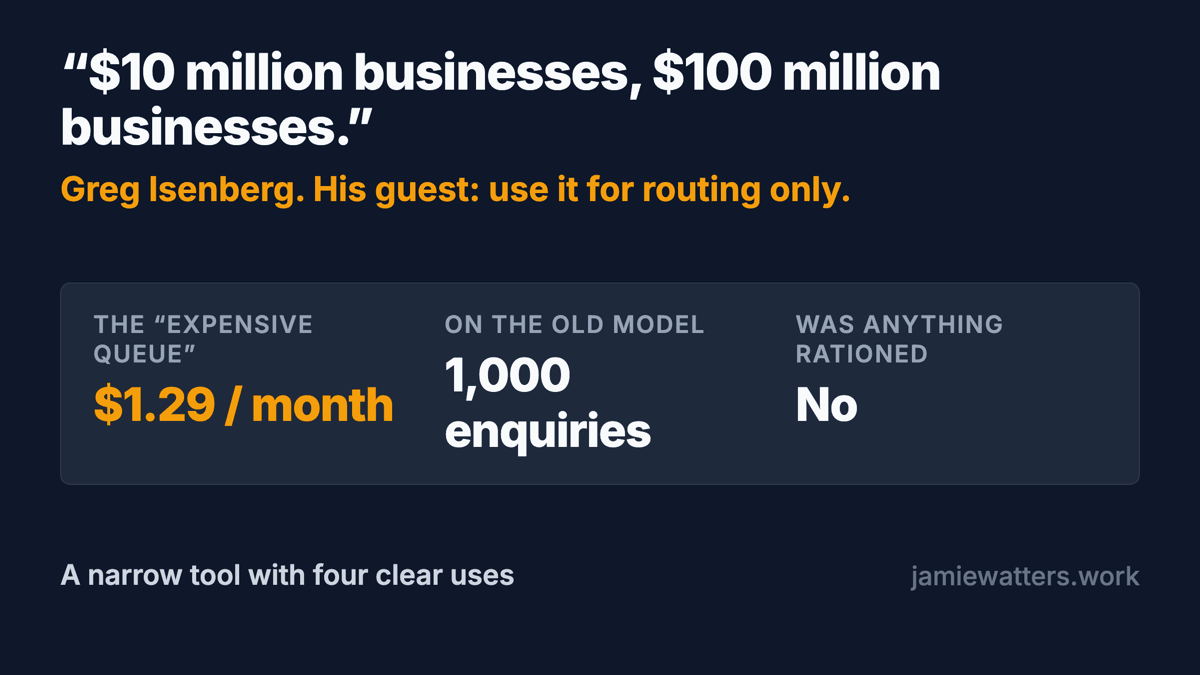
Jev is a narrow tool with four clear uses. Greg Isenberg's $10m framing is not one of them.
Greg Isenberg's episode on Jev promised $10m businesses. His own guest says use it for routing and keep it away from your money. Here is each claim against the data, and the four conditions under which the tool earns its place.
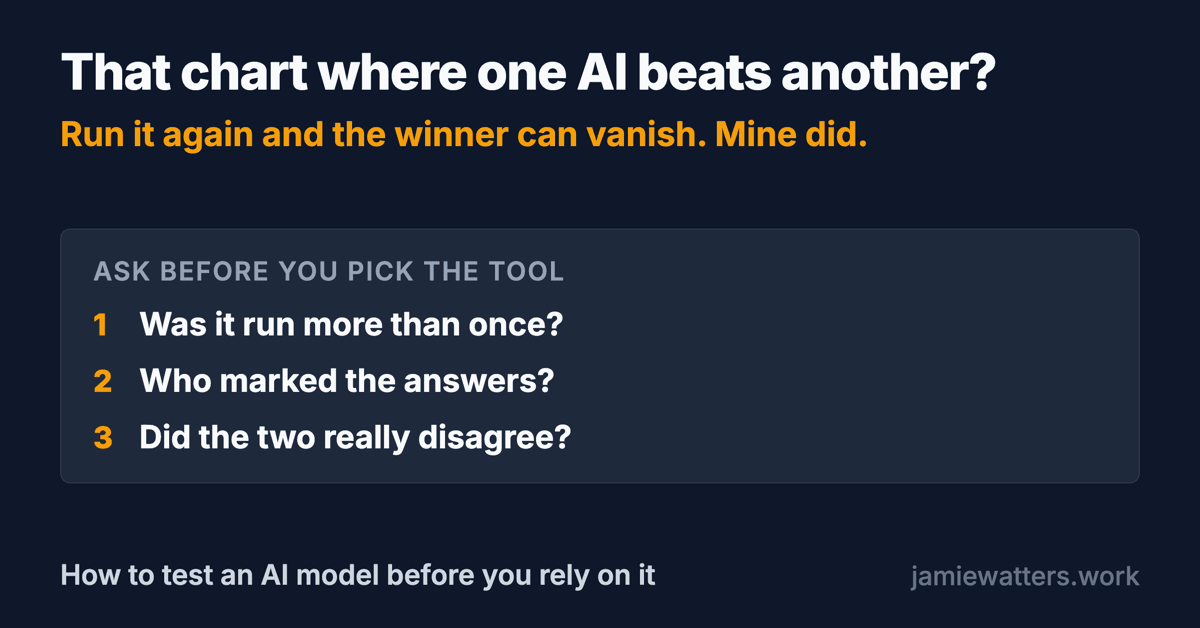
Test an AI model before you rely on it: six mistakes I made testing Jev
One run said Jev, TypeSafe's new model, beat GPT-5.4 by 11.1 points. Five runs couldn't tell them apart. The six mistakes behind that headline, and a checklist to run before you rely on any AI comparison, mine included.
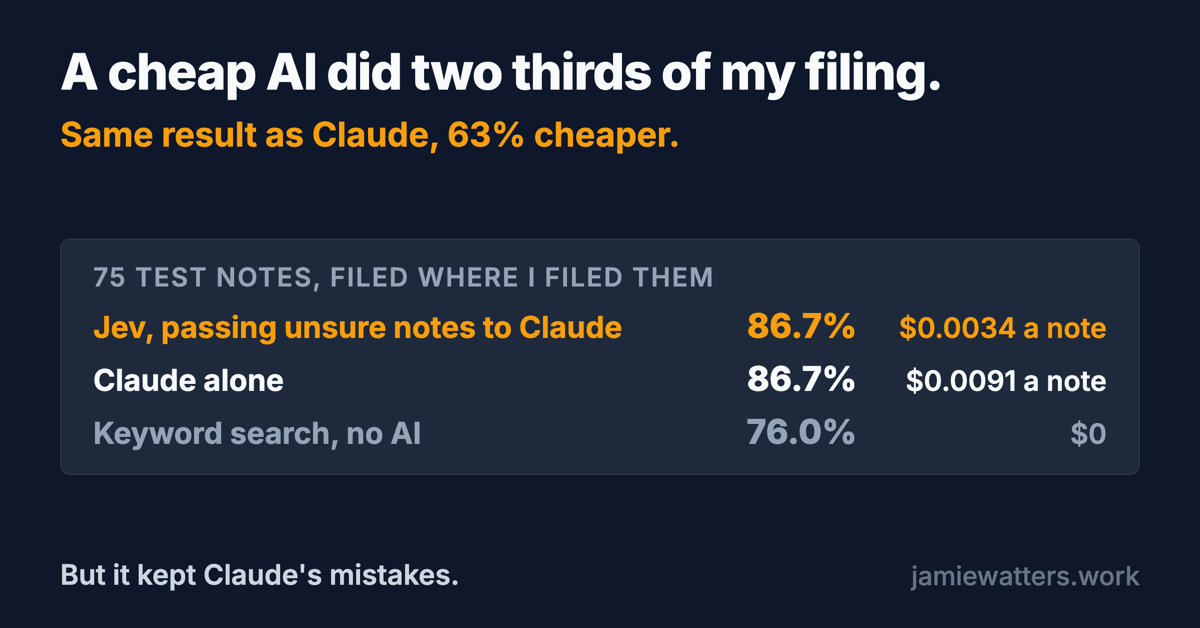
Jev, a cheap AI, did two thirds of my filing: same result as Claude, 63% cheaper
Jev, a cheap AI, handled two thirds of my filing and passed the rest to Claude. Same result as Claude alone, 63% cheaper. The catch: the hand-off isn't a check, because Claude makes the same mistakes.
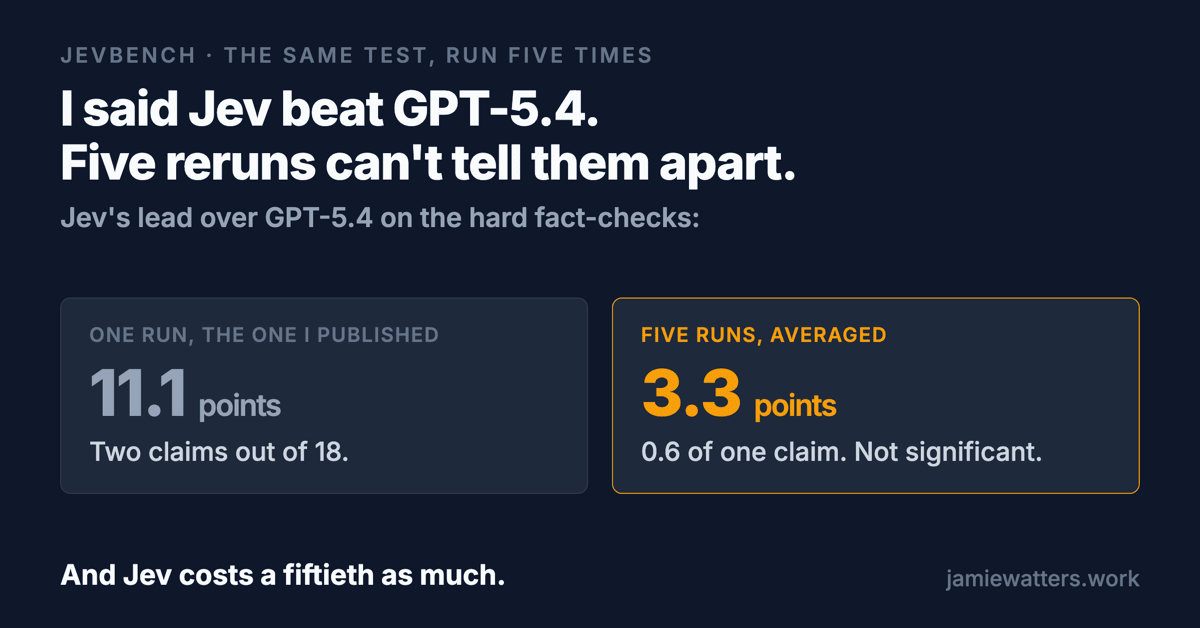
I said Jev beat GPT-5.4. Five reruns can't tell them apart, at a fiftieth of the cost.
I published that Jev, TypeSafe's new model, beat GPT-5.4 by 11.1 points on hard fact-checks. Rerun five times, the two can't be told apart, Jev costs a fiftieth as much, and it lets more wrong claims through. Plus the five-run check.
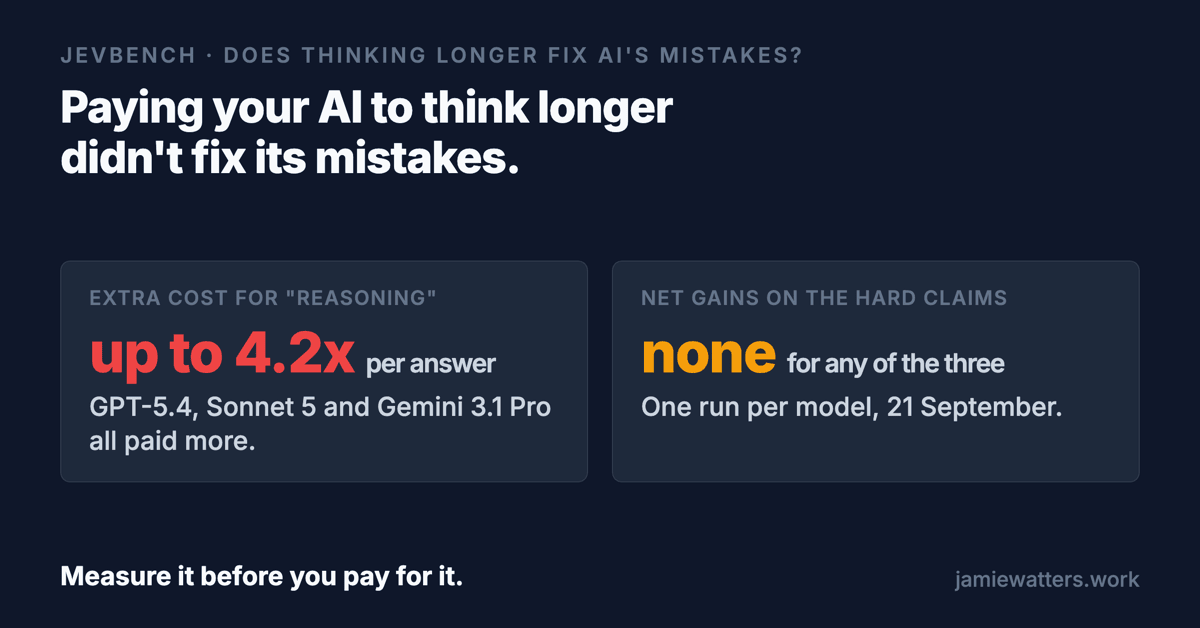
Paying your AI to think longer didn't fix its mistakes. It cost up to 4.2x more.
I gave three AI models room to think before answering, the fix everyone assumes will work. None got more reliable. It cost 2.4 to 4.2 times more per answer to find that out, and Jev, the cheap specialist model, still caught more of the mistakes.
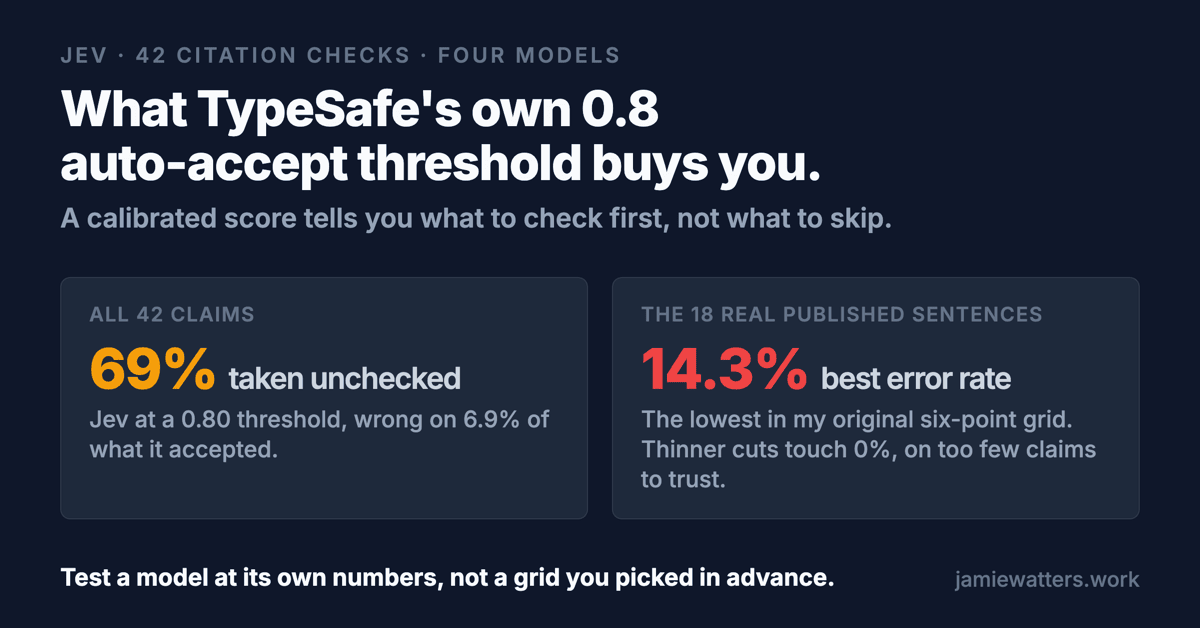
GPT-5.4 beats Jev on a confidence threshold, once tested at its own values.
I published a wrong finding last week: that GPT-5.4's confidence score has no usable threshold. It does, and swept over its own values it beats Jev at every…
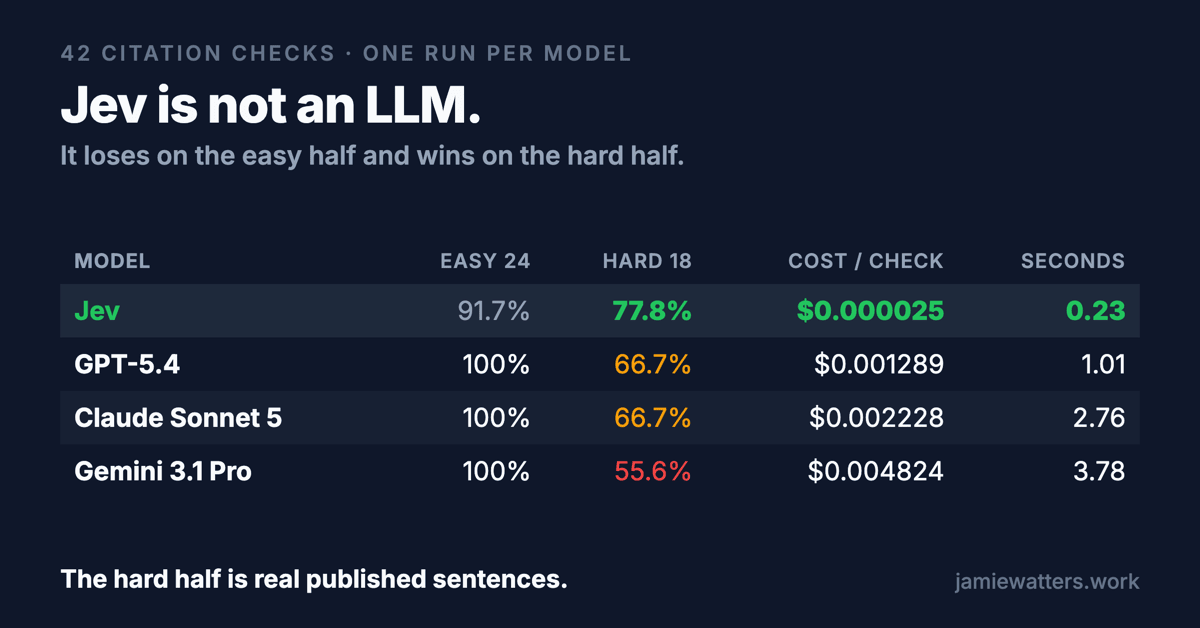
Jev is not an LLM. On the hard half it beat GPT-5.4, Gemini 3.1 Pro and Sonnet 5, at a fiftieth of the cost.
Jev does not generate text. You give it a question with defined answers and it hands back one of them plus a probability. On 42 citation checks it tied the…