The Journey
Most posts here are ad hoc: what I learned building with AI that week, some philosophy, a writing lesson, something I came across.
Subscribe via RSS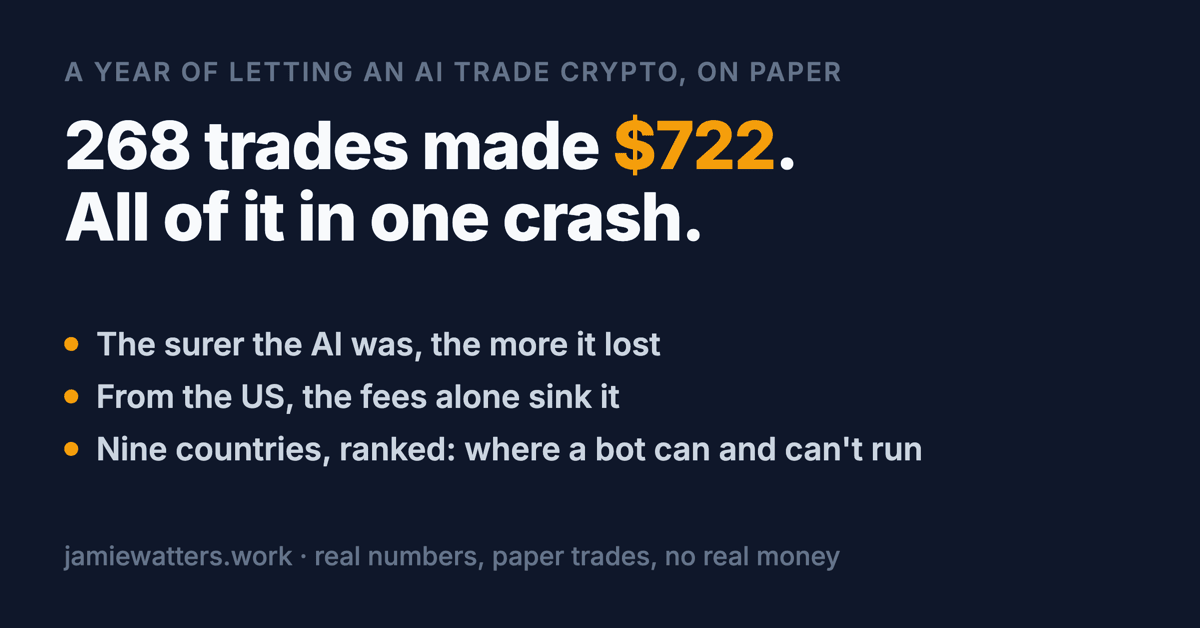
Thinking of buying a crypto trading bot? One year, 268 trades and $722 of profit say read this first
A year of an AI picking crypto trades, 268 of them on paper, made $722 and all of it in one crash. Fees, the exchange you can legally use and the country you live in decided more than the strategy. The five numbers to get before you build or buy a bot, and where it can't be run.
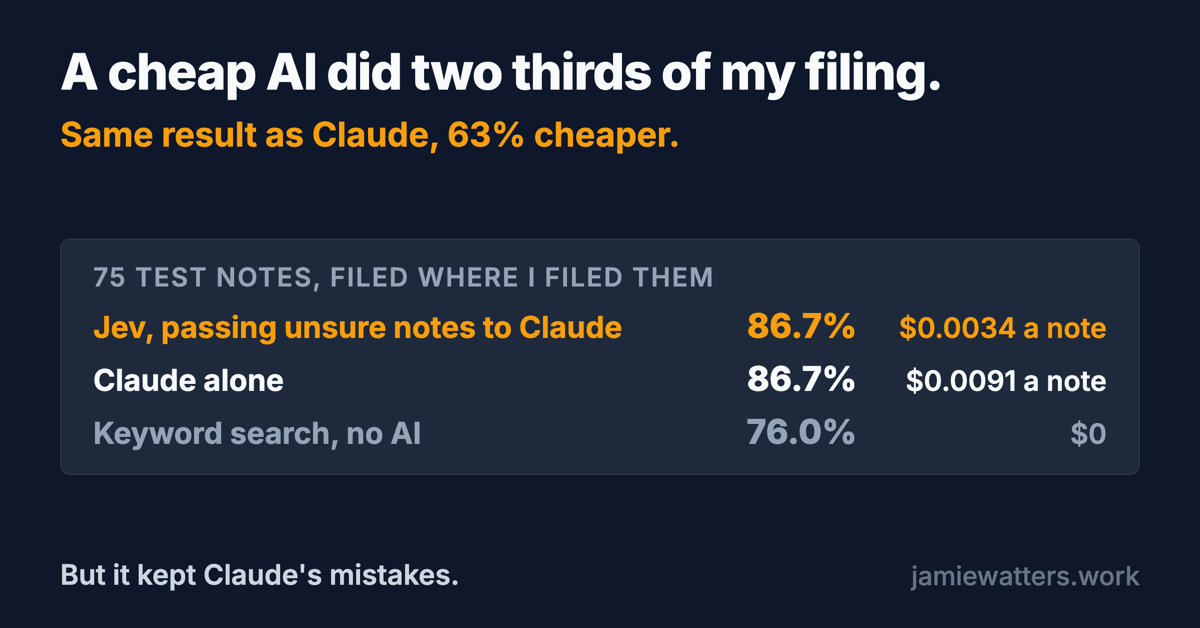
Jev, a cheap AI, did two thirds of my filing: same result as Claude, 63% cheaper
Jev, a cheap AI, handled two thirds of my filing and passed the rest to Claude. Same result as Claude alone, 63% cheaper. The catch: the hand-off isn't a check, because Claude makes the same mistakes.
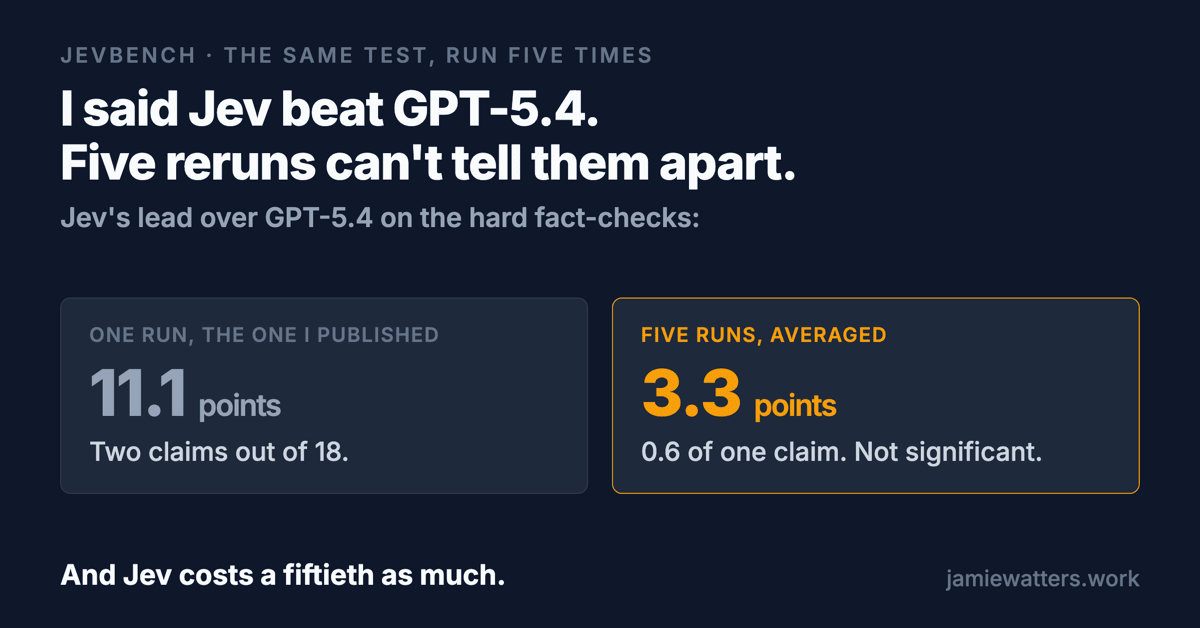
I said Jev beat GPT-5.4. Five reruns can't tell them apart, at a fiftieth of the cost.
I published that Jev, TypeSafe's new model, beat GPT-5.4 by 11.1 points on hard fact-checks. Rerun five times, the two can't be told apart, Jev costs a fiftieth as much, and it lets more wrong claims through. Plus the five-run check.
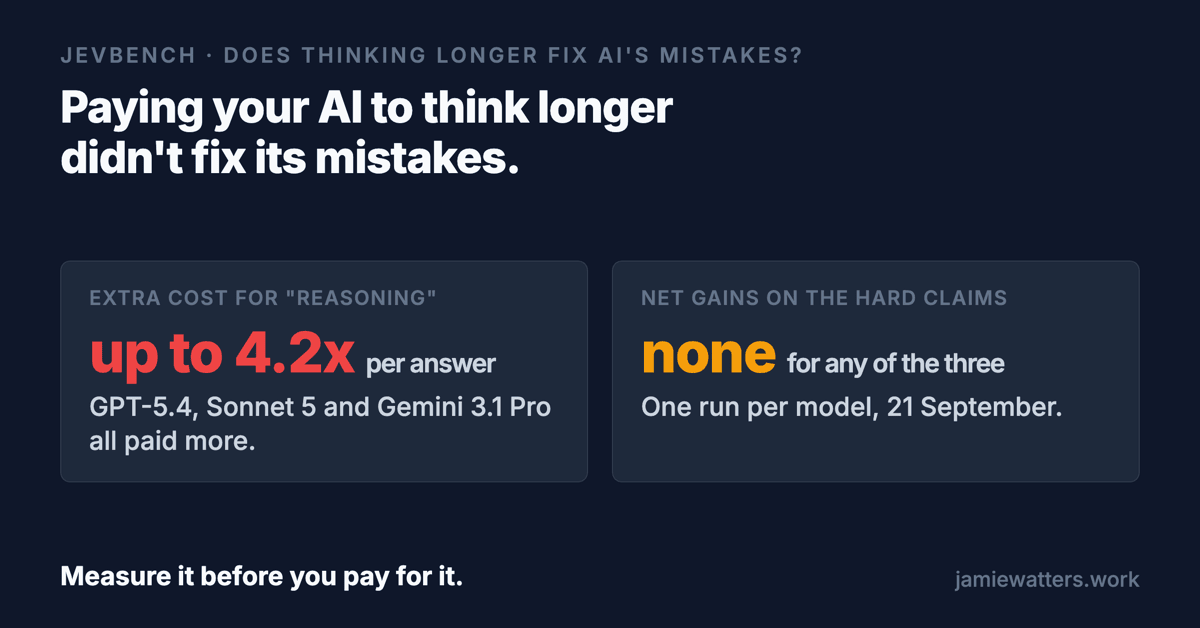
Paying your AI to think longer didn't fix its mistakes. It cost up to 4.2x more.
I gave three AI models room to think before answering, the fix everyone assumes will work. None got more reliable. It cost 2.4 to 4.2 times more per answer to find that out, and Jev, the cheap specialist model, still caught more of the mistakes.
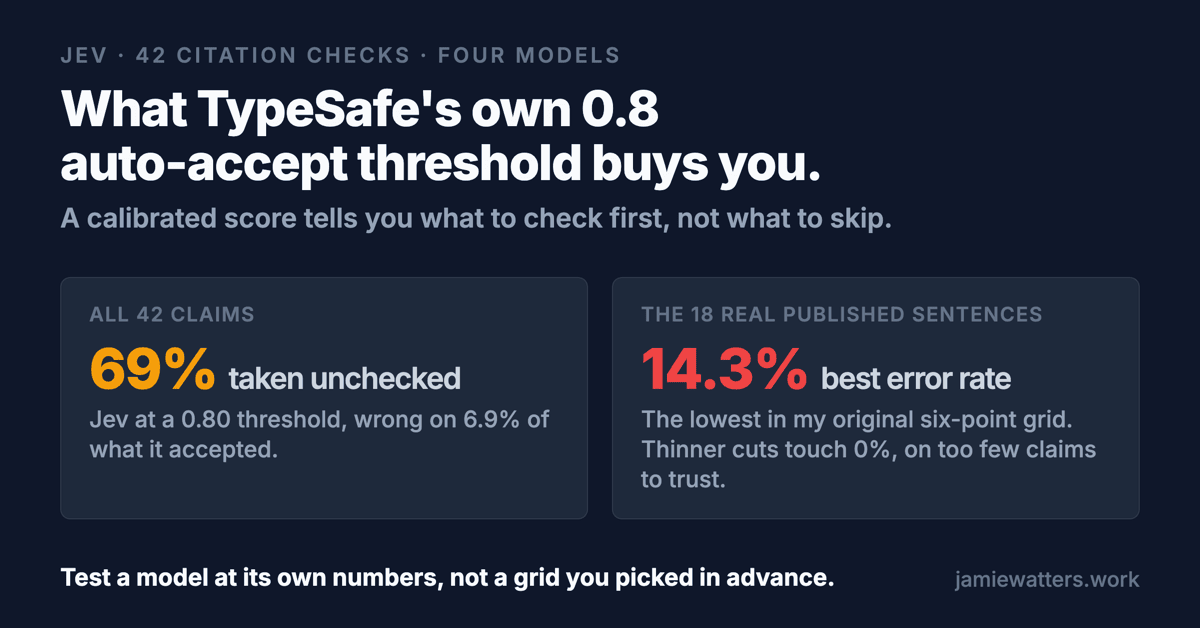
GPT-5.4 beats Jev on a confidence threshold, once tested at its own values.
I published a wrong finding last week: that GPT-5.4's confidence score has no usable threshold. It does, and swept over its own values it beats Jev at every…
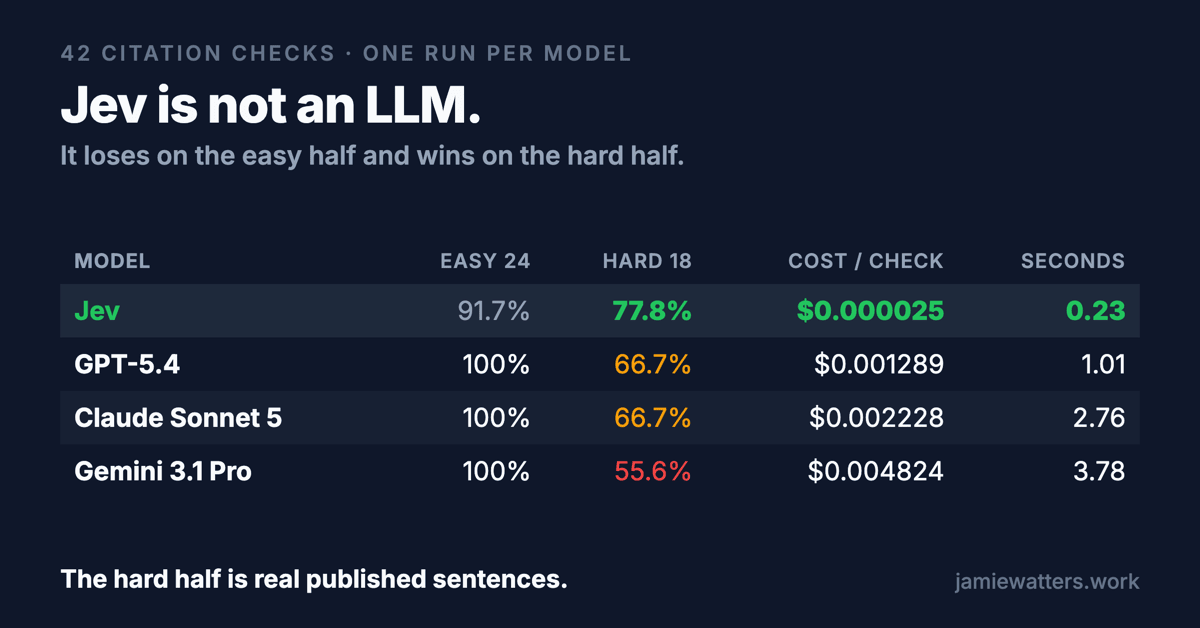
Jev is not an LLM. On the hard half it beat GPT-5.4, Gemini 3.1 Pro and Sonnet 5, at a fiftieth of the cost.
Jev does not generate text. You give it a question with defined answers and it hands back one of them plus a probability. On 42 citation checks it tied the…
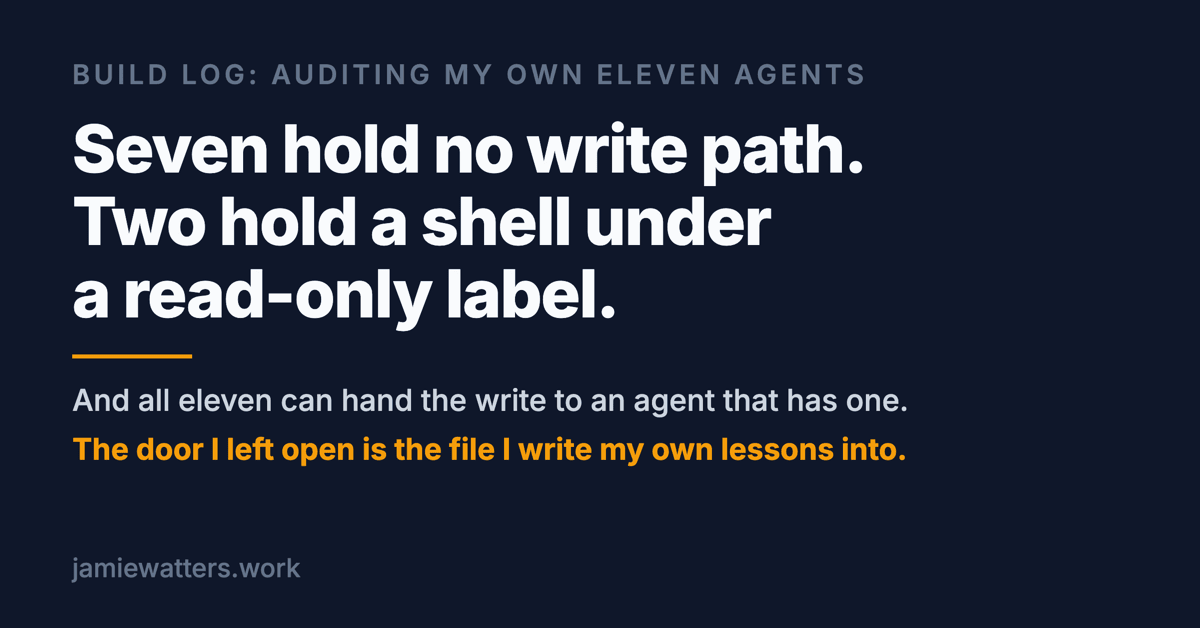
AI agent security: find the file your agents can write and every agent reads
In one research harness, a payload sitting in the file that loads into the next agent's system prompt infected that agent 55% of the time. The same payload in…
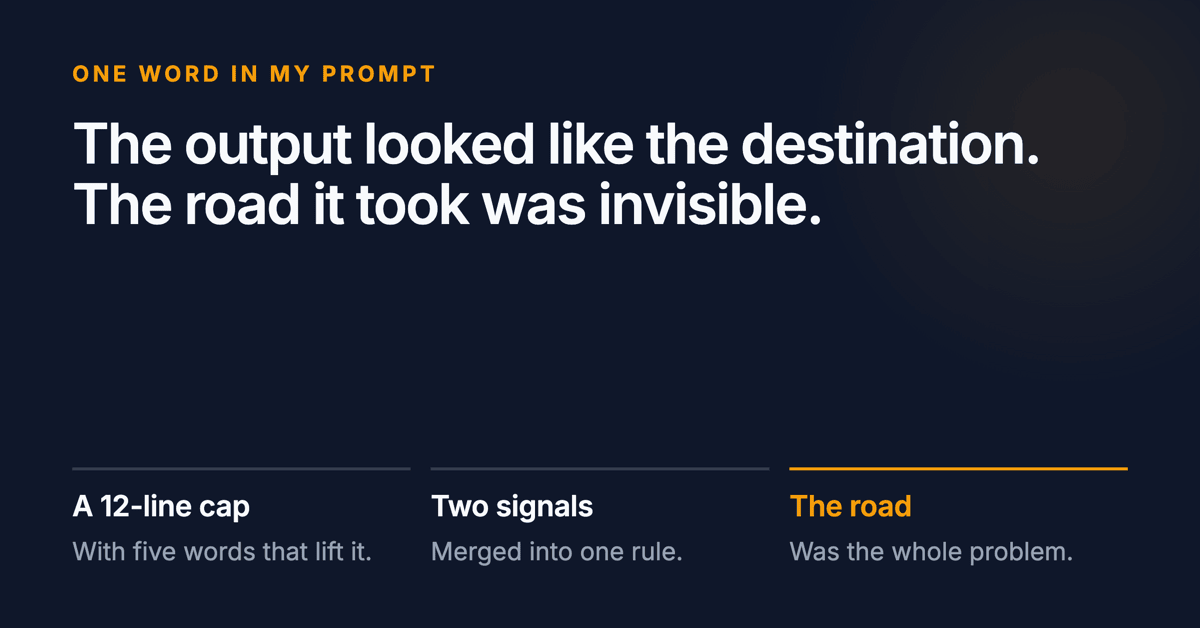
Reviewing AI output isn't enough: one word in my prompt made the guardrail disappear
I asked for a teacher and got a lecture. The output looked like the destination. The road it took was invisible, and the road was the whole problem.
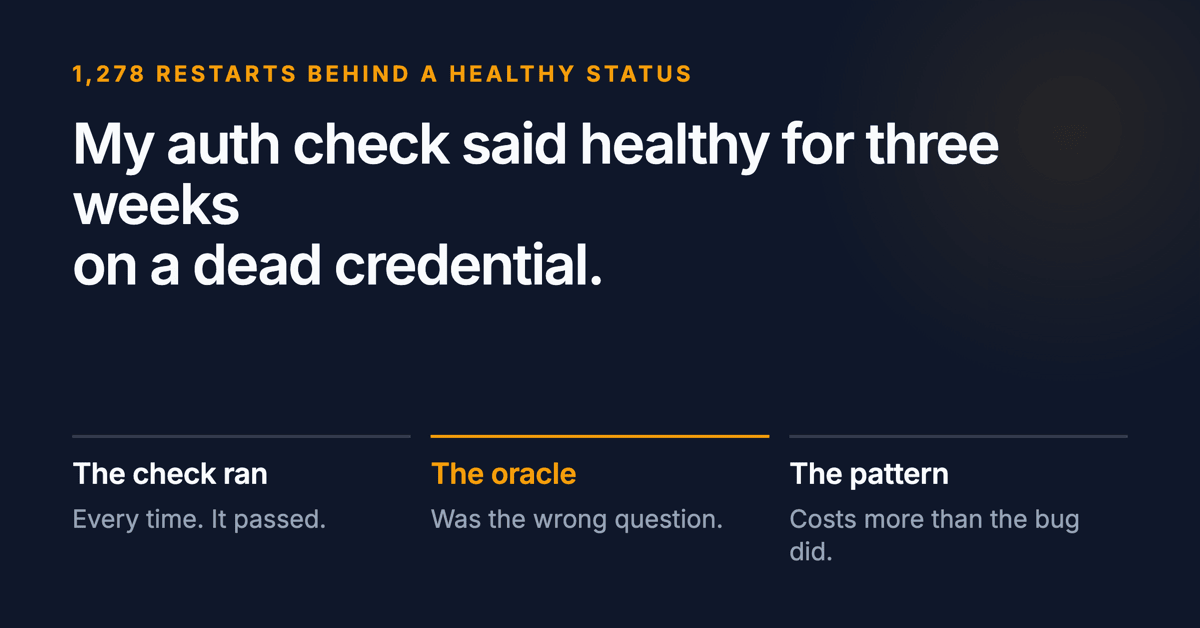
Why AI checks fail silently: 1,278 restarts behind a healthy status
My auth check said healthy for three weeks on a dead credential. The pattern behind it costs more than the bug did.
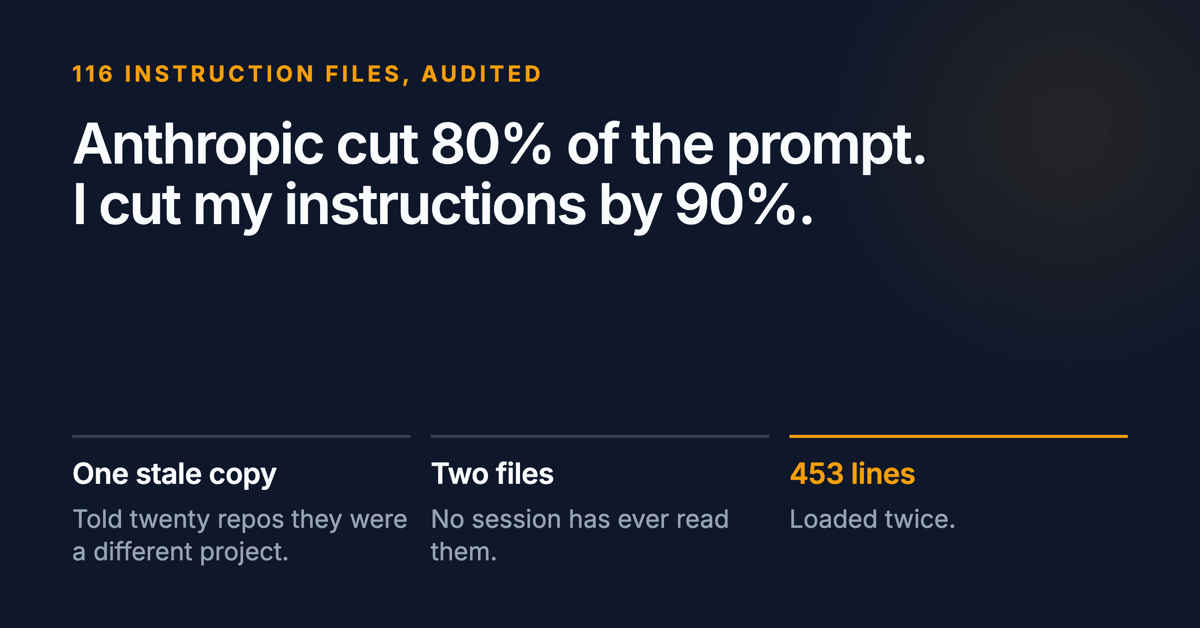
Anthropic cut 80% of Claude Code's prompt. I cut my CLAUDE.md by 90% the same day.
An audit of 116 instruction files found one stale copy telling twenty repos they were a different project, two files no session has ever read, and 453 lines loaded twice. Here is what to delete from your own CLAUDE.md, and the method that beats judgement.
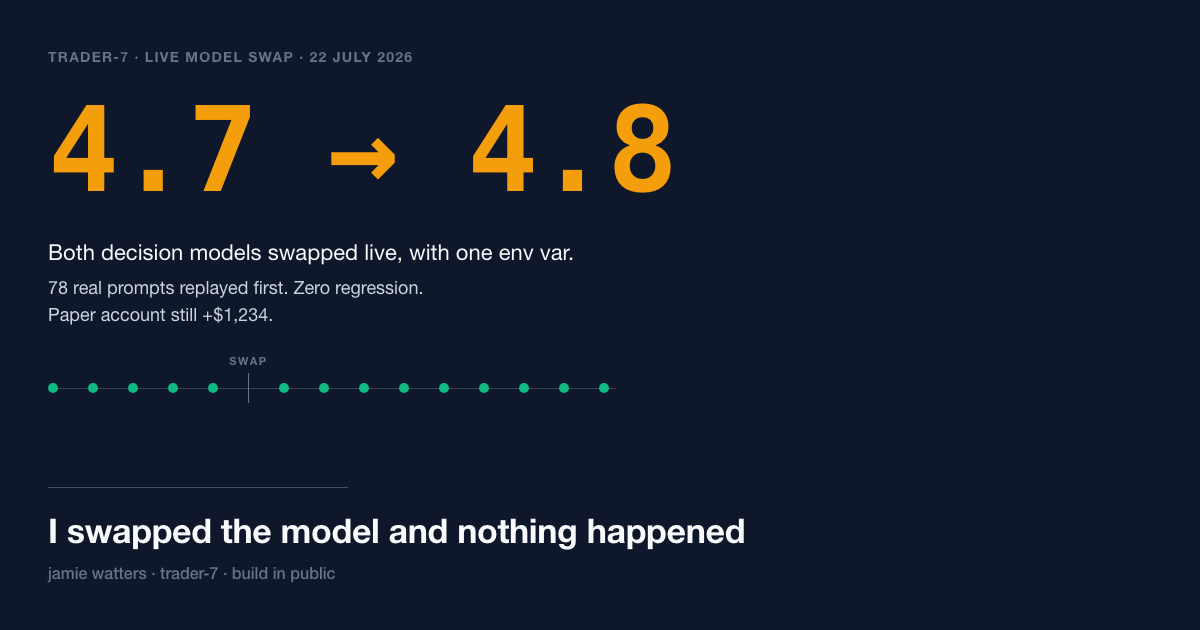
I swapped the model and nothing happened
Swapping the two LLMs behind an autonomous trading bot from Opus 4.7 to 4.8, live, without it missing a beat. The trick was replaying 78 real prompts first.
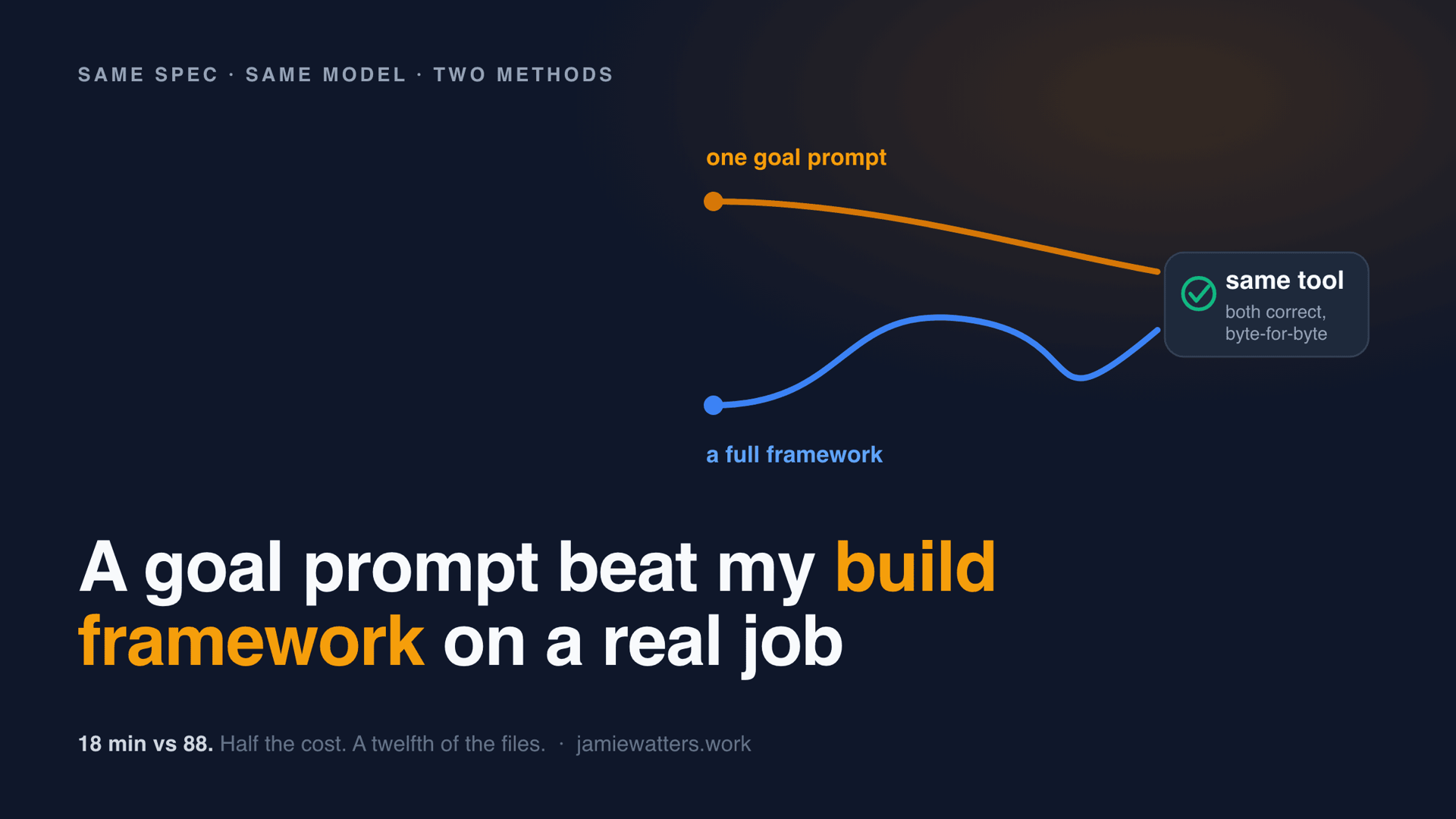
I built the same tool two ways to settle an argument
Spec-first or goal-first? I didn't believe either side, so I built the same tool both ways with one spec and one model. Both worked. The bill didn't tie.
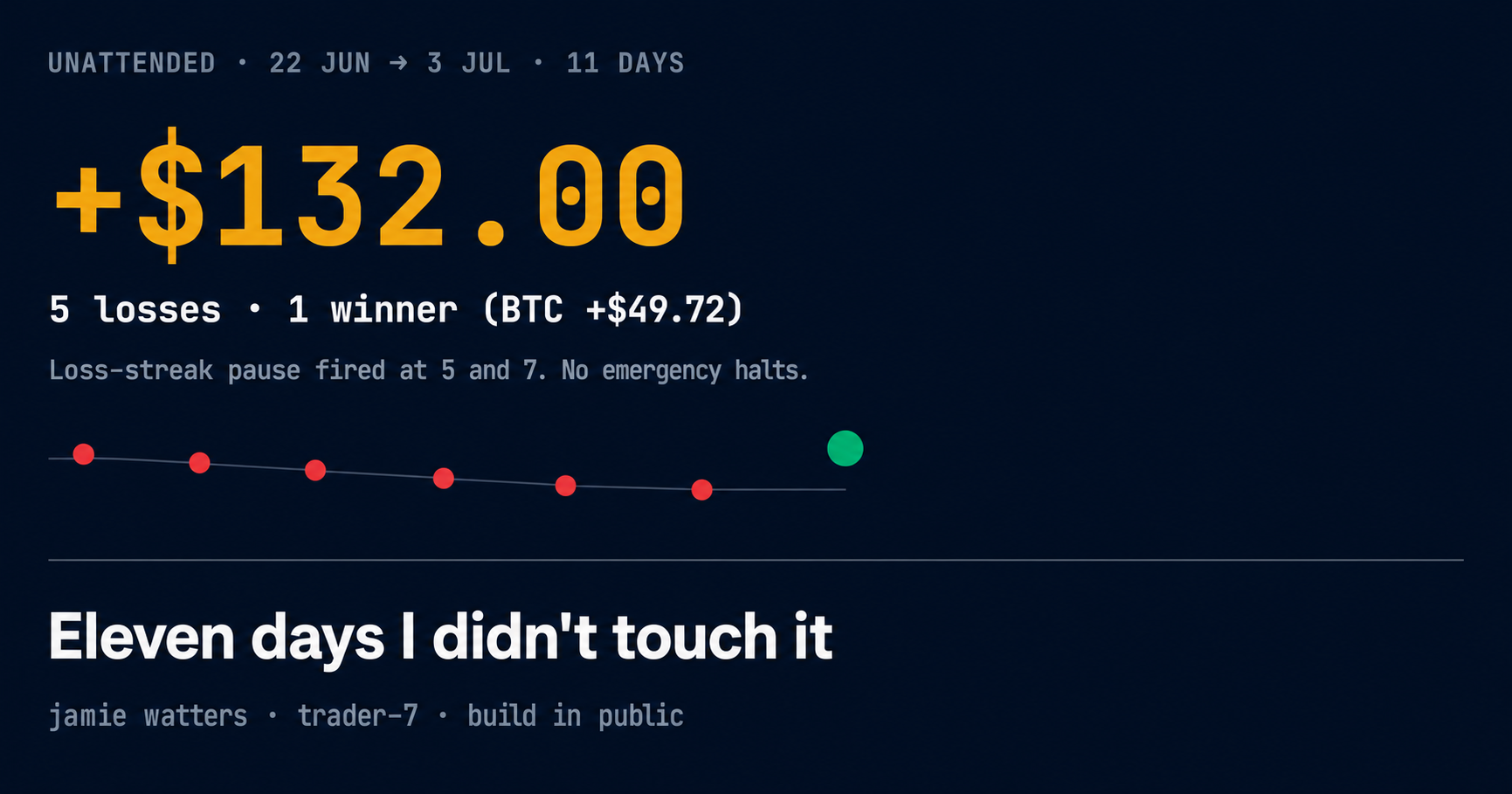
Eleven days I didn't touch it
Eleven days of unattended trading. Five losing trades, one winner covered them, +$132 net. What the system did right, what drifted, what I fixed on return.

How to trust AI-written code you didn't read line by line
AI can write working code in minutes. The hard part is trusting it without reading every line. Here's what actually makes AI-built code trustworthy.

Everyone's selling autonomous AI agents. I built one, and the real lesson was 20 years old.
An AI agent spent an afternoon optimising one of my apps. It tried a change, measured it, kept the one that was genuinely faster, reverted three that weren...
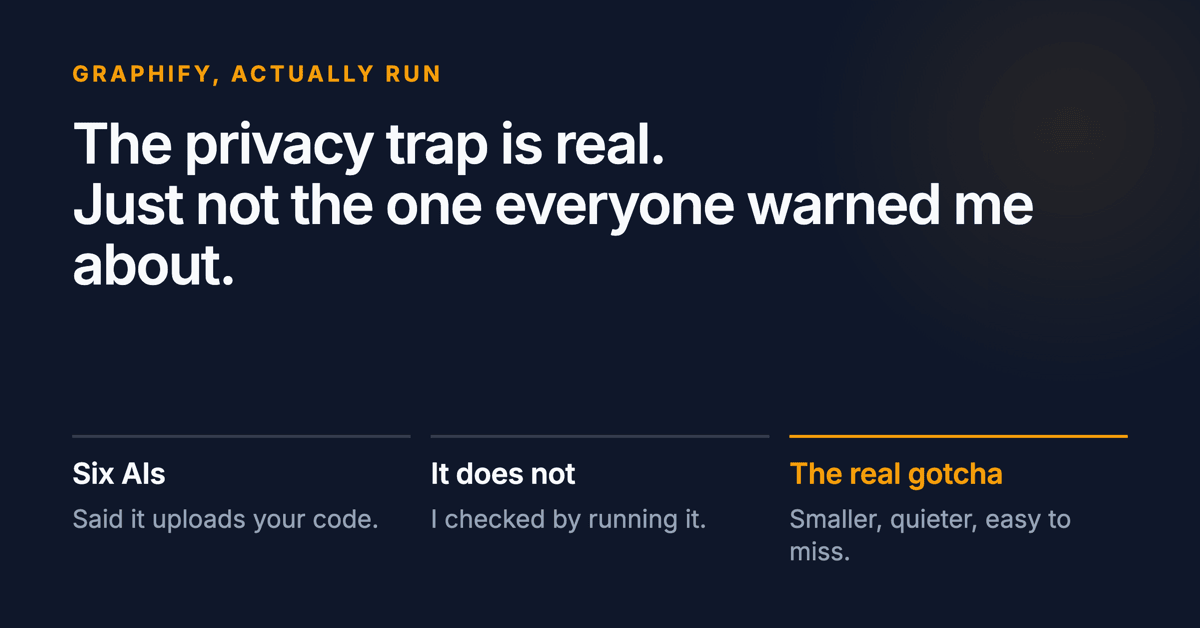
I Ran Graphify. The Privacy Trap Is Real, Just Not the One Everyone Warned Me About
Six AIs told me Graphify uploads your code. I checked by running it, and the actual gotcha is smaller, quieter, and easy to miss.
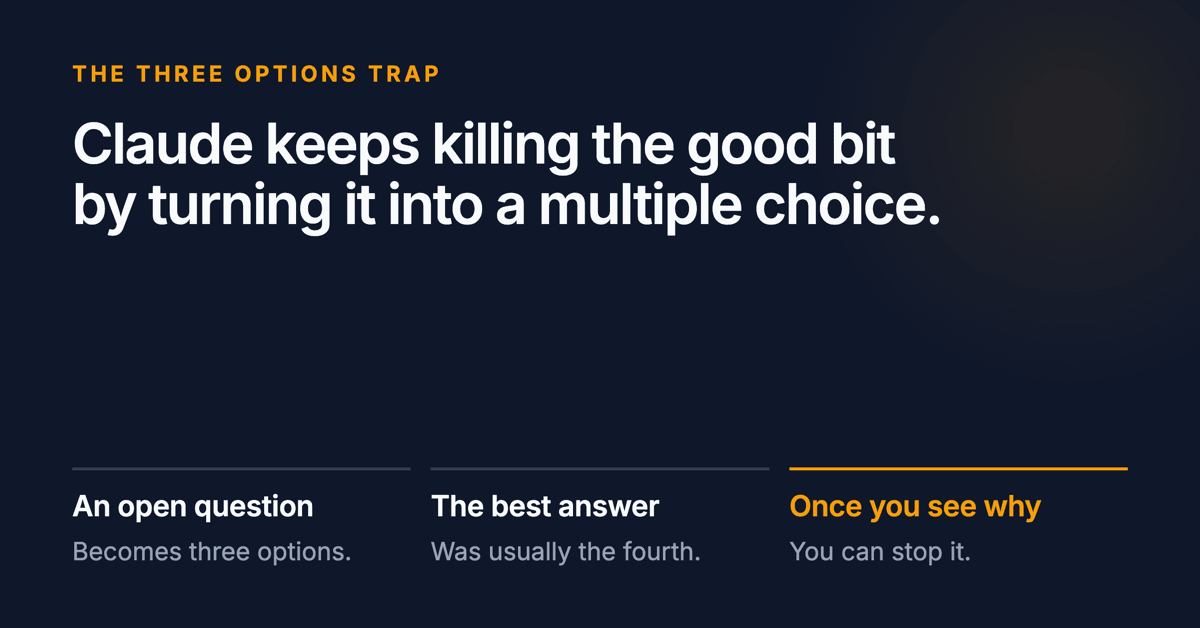
The Three Options Trap: Why Claude Keeps Killing the Good Bit
Claude has a habit of collapsing an open conversation into three multiple-choice options, and once you see why it does it, you can stop it doing it to you.
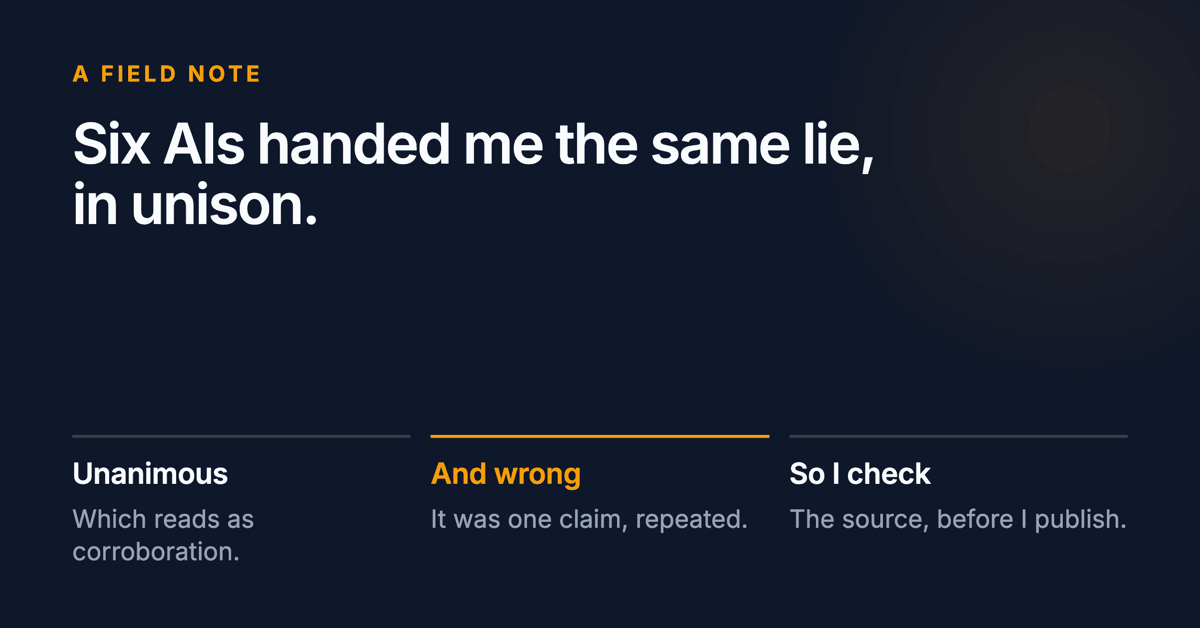
I Almost Told You a Lie. Six AIs Handed It to Me, in Unison.
A field note from researching Graphify: the real privacy model, the honest token numbers, and why I check the source before I publish.
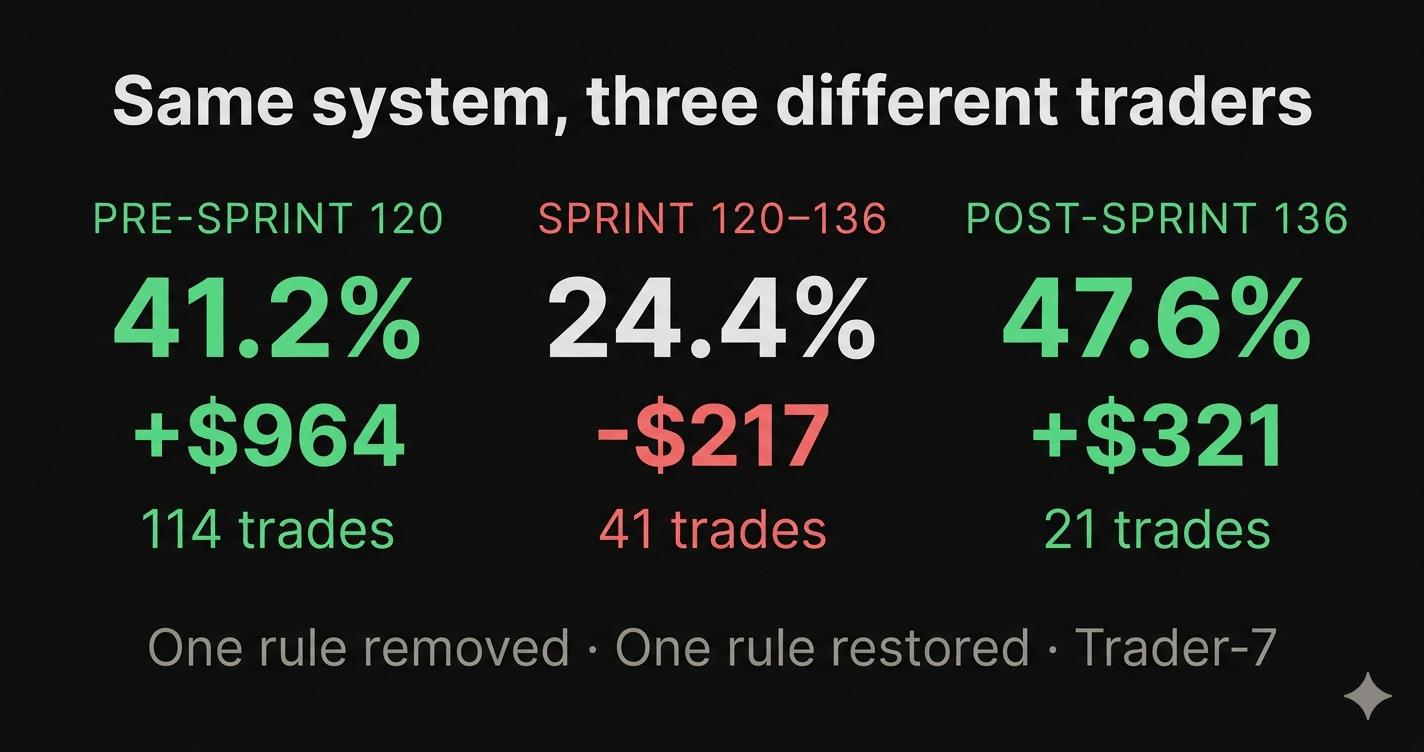
Same system, three different traders
Same code, same market, three time periods. One made $964, one lost $217, one's up $321. The difference wasn't the algorithm.